



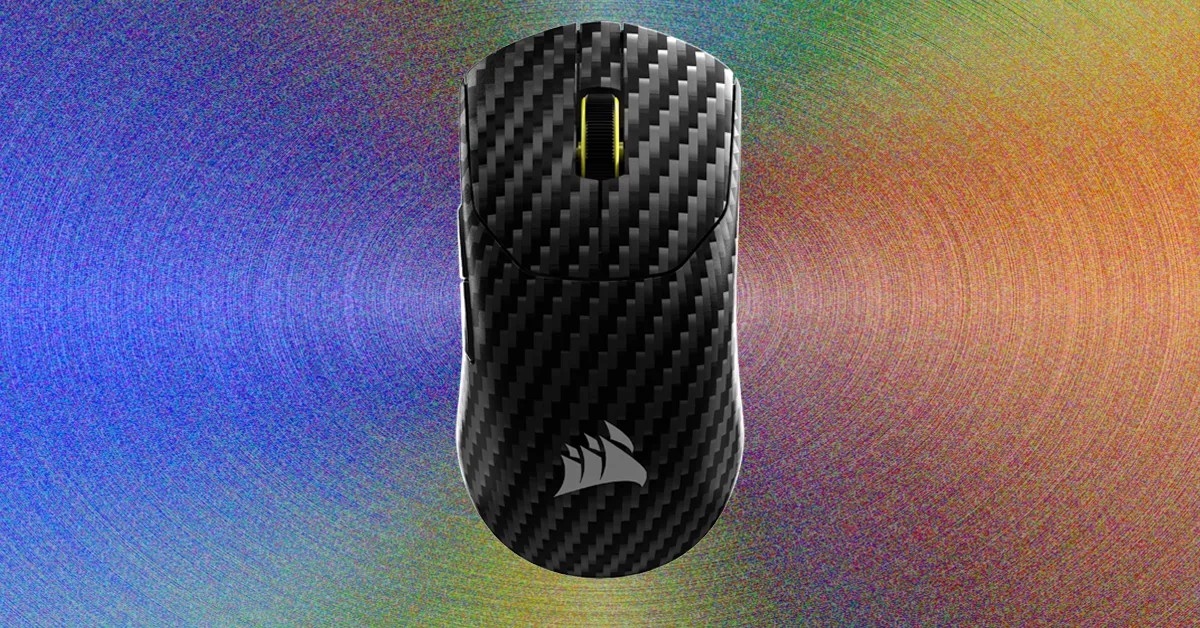
Corsair has entered the high-end gaming mouse market with the Sabre V2, offering models built with both carbon fiber and magnesium – materials traditionally reserved for aerospace and motorsports due to their exceptional strength-to-weight ratio. These mice address a common issue in ultralight designs: flimsy build quality. While ultralight plastic mice often feel fragile, the Sabre V2’s magnesium and carbon fiber construction delivers a noticeably rigid and premium experience.
The Evolution of Ultralight Design
For years, competitive gamers have sought the lightest possible mice, often at the expense of durability. Previous iterations, like Corsair’s own Sabre V2 Pro Ultralight, achieved impressive weights but felt cheap. The new Sabre V2 models (available in magnesium for $150 and carbon fiber for $200) directly counter this: they weigh between 55-56 grams, only slightly heavier than the lightest plastic options, but feel far more solid.
This marks a shift in priorities. Previously, materials science in mice was only for niche, ultra-expensive products. Now, these engineered materials are becoming accessible at competitive prices.
Build Quality and Ergonomics
The magnesium version features a subtle speckled texture, while the carbon fiber model boasts a smooth, satin-like finish. Both designs incorporate substantial cutouts to minimize weight. The magnesium model’s holes may cause slight indentations in the palm during prolonged use, but the carbon fiber model’s full shell provides a more consistent feel.
Ergonomically, both mice are nearly identical, sharing the same dimensions (38.7mm high, 59.5mm wide, 122.5mm long) and button placement. They suit medium to large hands comfortably, supporting palm, fingertip, and claw grips with a neutral shape.
Performance and Software
The Sabre V2 mice boast an 8,000 Hz polling rate, matching industry standards. The sensors are responsive and accurate, with minimal input lag. The buttons offer a crisp click with short travel, though some heavy-handed users might find them slightly light.
Corsair has transitioned from its legacy iCue software to a new web-based “Web Hub” interface. While web-based software can be unreliable long-term, it eliminates background processes and reduces system overhead. The Web Hub offers intuitive customization, including adjustable DPI settings (up to 33,000 DPI with five customizable stages) and polling rate adjustments.
Repairability and Long-Term Concerns
Despite the premium materials, the Sabre V2’s internal construction raises some repairability concerns. The shells are held together by plastic clips that can break upon disassembly, and the screws in the carbon fiber model are self-tapping, increasing the risk of stripping. While not catastrophic, repeated disassembly could compromise structural integrity.
Corsair prioritized weight savings over robust assembly, which may impact long-term durability. The mice are simple internally, but careless disassembly could still cause issues.
The Verdict
The Corsair Sabre V2 carbon fiber and magnesium gaming mice represent a significant step forward in ultralight design. They offer a compelling combination of low weight, rigid build quality, and competitive pricing. While the internal construction isn’t perfect, these mice deliver a premium experience that rivals Razer and Logitech’s flagship models.
If you seek a durable, high-performance gaming mouse without sacrificing weight, either the magnesium or carbon fiber Sabre V2 is a worthy investment.