



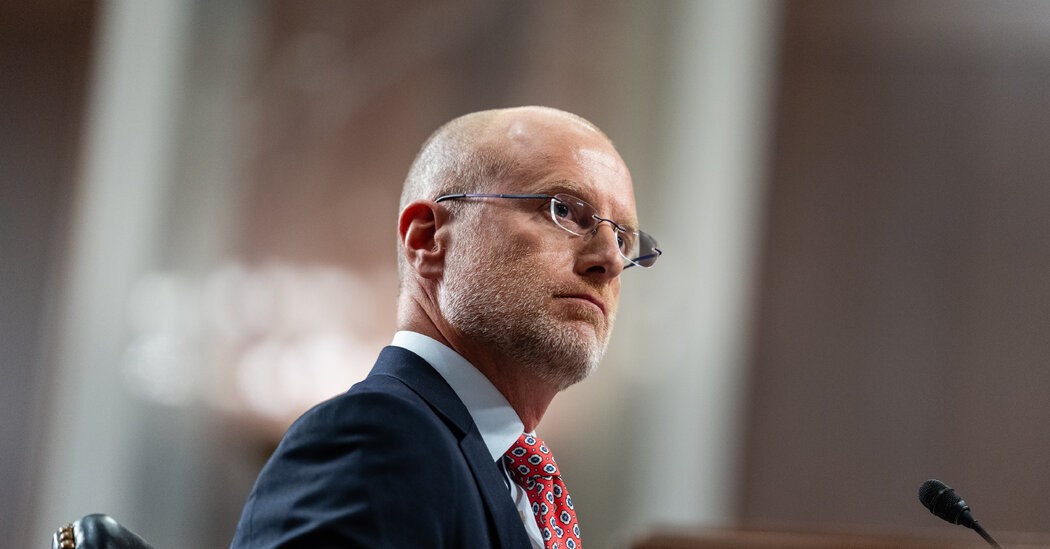
The chairman of the Federal Communications Commission (FCC), Brendan Carr, revealed in a Senate hearing that the agency is not truly independent, fueling concerns that former President Trump could leverage it for censorship or retribution against media outlets. Carr acknowledged that the president has broad authority over the FCC, including the ability to fire him “for no reason at all,” a statement that shocked Democratic lawmakers.
Pressure on Broadcasters
Carr’s admission came during a tense oversight hearing before the Senate Commerce, Science and Transportation Committee. Democrats aggressively questioned him about recent threats to revoke broadcast licenses from stations airing content deemed unfavorable, particularly after Jimmy Kimmel made critical remarks about the attacker of right-wing activist Charlie Kirk.
Following Carr’s warnings, major broadcasters like Sinclair and Nexstar temporarily suspended Kimmel’s show, and ABC (owned by Disney) briefly pulled it off the air. Carr has also initiated investigations into NPR and other major networks over content and advertising decisions.
The “Public Interest” Standard
Carr defends his actions by invoking the “public interest” standard, arguing that broadcasters have a responsibility to serve the public good. However, critics contend that this standard is being weaponized to punish critical reporting. Trump had openly pushed for the FCC to retaliate against media coverage he considered unfair.
The FCC’s power lies in its control over broadcast licenses and its ability to approve or block mergers within the industry. This leverage gives the agency significant influence over media organizations.
The Illusion of Independence
Senator Edward J. Markey of Massachusetts accused Carr of “weaponizing the public interest standard” by using license renewals as pressure against media companies with pending regulatory matters. Senator Andy Kim of New Jersey bluntly stated that Carr’s true boss should be the American people, not Trump.
Notably, the FCC’s own website previously described the agency as “independent,” but as of Wednesday afternoon, the word “independent” was removed from its mission statement.
Carr’s candid admission exposes a fundamental weakness in the FCC’s structure: its susceptibility to presidential influence. This raises serious questions about whether the agency can truly act as an impartial regulator of the media landscape.
The lack of genuine independence within the FCC underscores the potential for political interference in broadcasting and raises concerns about the future of free speech in the media.