




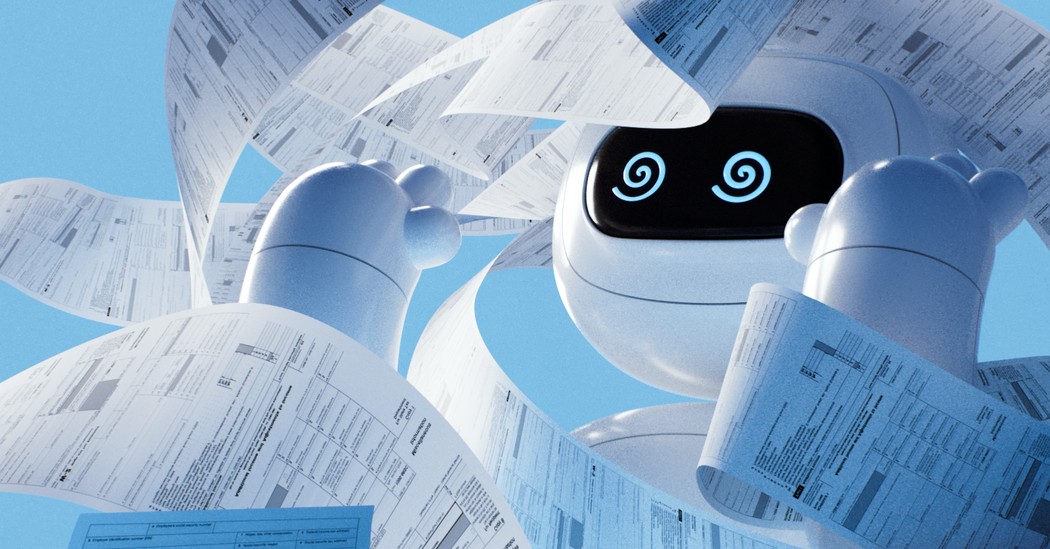
Artificial intelligence (AI) is rapidly transforming industries, from military operations to medical treatments. However, one critical area where AI currently falls short is federal tax filing. Recent testing by The New York Times demonstrates that even advanced chatbots—including Google’s Gemini, OpenAI’s ChatGPT, Anthropic’s Claude, and xAI’s Grok—consistently miscalculate tax returns by significant margins.
AI Struggles with Accuracy
The study used eight realistic tax scenarios provided by TaxSlayer, a professional tax service. Despite being given all necessary forms and documentation, the AI chatbots averaged errors exceeding $2,000 per return. This isn’t merely a slight inaccuracy; it’s a level of unreliability that could lead to penalties or legal issues for taxpayers.
Why Taxes Are Different
The problem lies in the hyper-detailed nature of tax law. As technology analyst Benedict Evans explains, “The problem with taxes is all those very small little details matter, and it’s not going to get every single little detail right.” While AI models improve rapidly, they still produce roughly correct answers, which is insufficient when precision is required. The consequences of even minor errors in tax filings can be severe, making AI an unsuitable tool for this task.
The Future of AI and Taxes
AI may eventually become reliable enough for tax preparation, but currently, the risk of miscalculation outweighs the convenience. The study highlights that while AI excels in complex tasks like drone operation and cancer treatment, its grasp of nuanced financial regulations remains weak. For now, taxpayers should rely on proven methods—professional accountants or verified tax software—rather than trusting AI with their financial obligations.
Until AI can guarantee accuracy in tax calculations, it’s best left to tasks where minor errors don’t carry legal or financial consequences.