



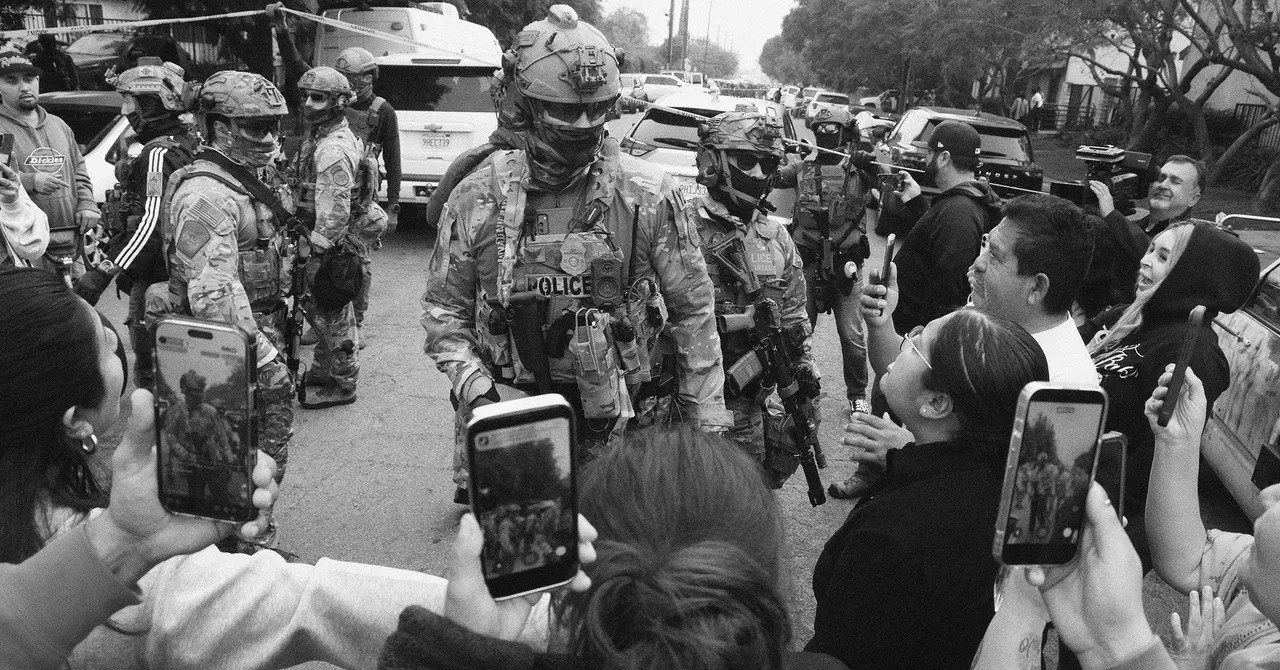
In January 2026, two individuals in Minneapolis were killed while documenting Immigration and Customs Enforcement (ICE) operations. Renee Nicole Good, a legal observer, and Alex Pretti, who was recording with his phone, both became victims of violence perpetrated by federal agents. Their deaths highlight a dangerous paradox: while video documentation is essential for holding ICE accountable, the act of recording itself has become increasingly risky.
The escalation in aggressive tactics by ICE and Border Patrol has made “safe” observation impossible, according to Trevor Timm, cofounder of the Freedom of the Press Foundation. Despite the First Amendment protecting the right to record government actions in public spaces, federal agents are actively targeting those with cameras. The case of Alex Pretti, whose murder was captured from multiple angles due to other onlookers filming, underscores this reality. Video evidence exposed the Trump administration’s immediate attempts to distort the narrative, but at a lethal cost.
The Escalation of Surveillance and Retaliation
For over two decades, smartphones have empowered activists and citizens to document injustice. However, the U.S. now sees a growing trend of federal agents directly targeting people with cameras. The Department of Homeland Security (DHS) has labeled documentation as “doxing” and even framed it as “violence,” with officials claiming it reveals agents’ identities. Despite ICE’s own actions contributing to this exposure, DHS maintains this position, creating a clear threat to anyone recording their activities.
Jackie Zammuto, associate director at Witness, explains that video documentation has the power to expose abuses, enforce accountability, and counter official narratives. But this power comes with an escalating risk, as journalists and legal observers are increasingly targeted, even when acting within legal bounds.
Practical Steps for Safer Documentation
Given the dangers, experts suggest several measures to mitigate risk:
Before Filming: Protecting Your Digital Footprint
- Use a burner or alternative phone: This minimizes the digital trace linked to your primary device. ICE has built extensive surveillance capabilities, including purchasing online data, deploying drones, and accessing mobile phone tracking systems.
- Disable biometrics: Turn off Face ID and fingerprint unlocking. Officials need a warrant for PINs or passcodes, whereas biometric access is easier to compel.
- Minimize digital life on the device: Avoid bringing your daily phone if possible.
While Filming: Capturing Comprehensive Evidence
- Record continuously: Start filming as soon as possible and keep the camera rolling. Stopping and starting footage can be easily dismissed as manipulated.
- Film horizontally: Capture a wider field of view to reduce accusations of selective editing.
- Document context: Include landmarks, street signs, or time stamps to verify the footage’s authenticity.
- Focus on agents: Prioritize filming the agents themselves, capturing badges, clothing, and vehicle details for transparency.
- De-escalate if confronted: Comply with orders and document your compliance verbally (“I’m backing up”). Avoid lying or attempting to deceive agents.
After Filming: Securing and Distributing Evidence
- Delay immediate posting: Sharing footage too quickly can expose individuals in the video to harm. The FBI’s facial recognition systems may track those captured on camera.
- Blur faces: Protect bystanders by obscuring their identities before sharing.
- Scrub metadata: Remove location data and other identifying information from files.
- Share with trusted parties: Provide footage to media, investigators, lawyers, victims, or civil society groups before public release.
- Backup footage: Create multiple copies, including cloud storage, while acknowledging potential subpoenas from law enforcement.
Leveraging Documentation for Accountability
Beyond individual safety, systematic documentation can drive broader accountability. Several state attorneys and local governments have set up portals for submitting video evidence of ICE activity. Organizations like Bellingcat use open-source software to archive and analyze footage, identifying patterns of behavior and potential violations of human rights.
The ACLU is representing observers in lawsuits against the federal government, relying heavily on firsthand declarations to present evidence in court. Thorough and detailed accounts of unlawful conduct are crucial for legal challenges.
The reality is that documenting ICE operations carries significant risk. But by employing strategic tactics, prioritizing safety, and collaborating with legal and investigative resources, individuals can contribute to holding federal agents accountable for their actions.
The key is to recognize that the act of recording itself has become a form of resistance, requiring careful preparation, execution, and follow-through to maximize impact while minimizing personal danger.