


Solvay, the world’s leading processor of rare earth materials outside of China, announced new partnerships aimed at strengthening the United States’ supply chains for these vital minerals. This move comes as Europe struggles to catch up in the race to break free from China’s tight grip on the rare earths market.
Rare earth minerals are essential components in advanced technologies like powerful magnets used in electric vehicles and renewable energy systems. Their importance is driving a global scramble for control over their production and supply.
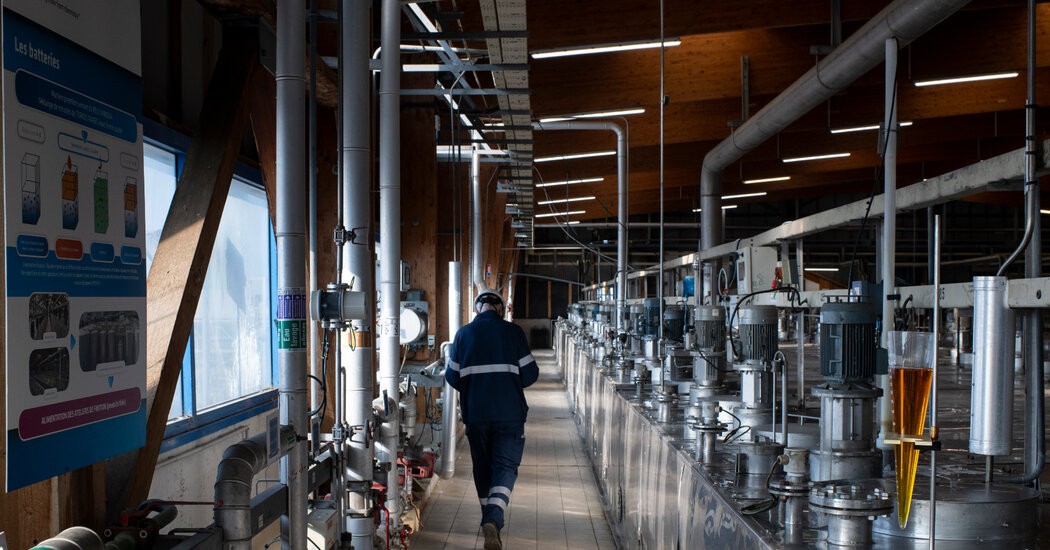
Solvay’s primary European processing plant in La Rochelle, France, will now ship rare earths directly to Noveon Magnetics, a US company specializing in high-performance magnets used in the automotive and green energy sectors. In another deal, Solvay partnered with Less Common Metals of Britain to secure more reliable access to rare earth materials within the United States.
While Europe possesses limited rare earth mining capabilities, Solvay sources its minerals from countries like Australia and employs extensive battery and magnet recycling programs to recover valuable residues.
These deals underscore the US’s proactive efforts to rebuild its domestic rare earths supply chains, a response to China’s export restrictions triggered by trade tensions under President Trump. These restrictions have fueled urgency among nations seeking alternatives.
“It seems this is moving a bit faster in the United States,” said Philippe Kehren, Solvay’s CEO, highlighting Europe’s lagging progress.
Both Europe and the US once had robust rare earths industries but outsourced much of the polluting production to China decades ago. This ultimately led to Beijing’s near-monopoly on the sector, leaving Europe and the US heavily reliant on Chinese imports. The dependence is even more pronounced in Europe: 98% of its rare earth imports originate from China compared to 80% for the United States.
Although China eased some export restrictions earlier this year, European and American producers are racing against time to rebuild their national supply chains. Europe recently adopted the Critical Raw Materials Act, aiming to secure access to these essential materials. However, Europe still trails the US on several fronts.
The high financial risks and costs associated with rare earths production create a significant barrier for investment. The US is addressing this by guaranteeing minimum profitability for investments through subsidies that bridge the gap between lower prices set by Chinese producers and those of non-Chinese competitors.
“To have a real business case, you need to have customers that will guarantee you a certain level of volume and a certain level of price,” Kehren explained. “Today, we don’t have this in Europe yet.”
This difference in approach highlights the distinct strategies each region is employing to secure its access to these vital minerals in an increasingly competitive global landscape.