




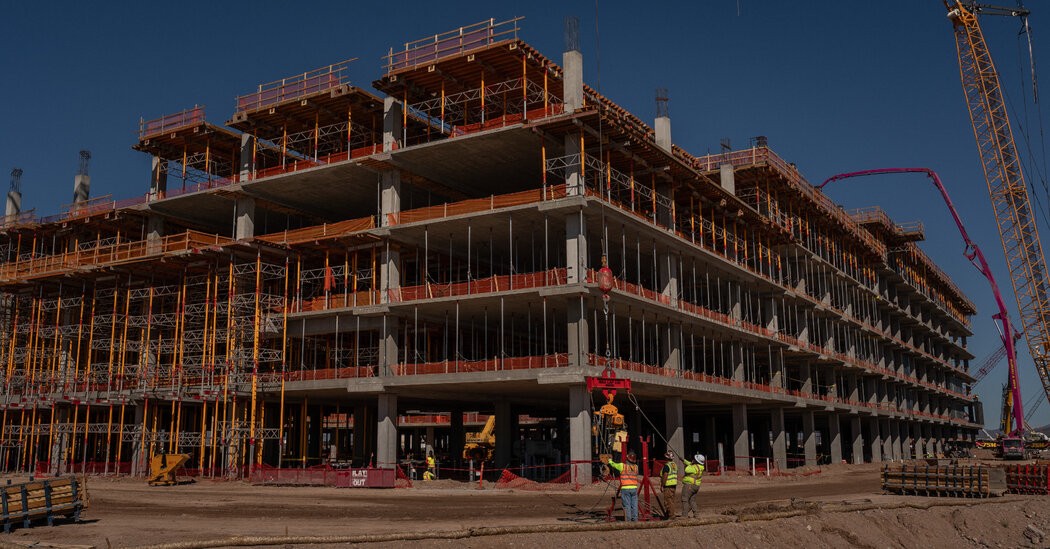
The Trump administration is poised to announce a trade agreement with Taiwan that will lower tariffs on Taiwanese exports and secure further investments from Taiwan Semiconductor Manufacturing Corporation (TSMC) in U.S. semiconductor manufacturing. The deal, nearing completion after months of negotiation, reflects a broader strategy by the administration to leverage trade concessions in exchange for commitments that advance U.S. national security interests.
Tariff Reductions and Investment Commitments
Under the agreement, U.S. tariffs on goods from Taiwan will be reduced to 15 percent – aligning with rates already extended to allies like Japan and South Korea. This move incentivizes trade while simultaneously strengthening economic ties with a critical partner. Crucially, TSMC has committed to building at least five additional semiconductor fabrication plants (fabs) in Arizona, effectively doubling its footprint in the state. While exact timelines remain unclear, this expansion will significantly boost U.S. chip production capacity.
Geopolitical Context and Supply Chain Security
The urgency behind this deal stems from growing concerns over Taiwan’s geopolitical vulnerability. Beijing claims Taiwan as a renegade province and has escalated military pressure, including live-fire drills, raising fears of potential disruption to global supply chains. Taiwan currently dominates the production of advanced semiconductors—the essential components for computers, AI infrastructure, automotive industries, and defense systems.
Relying heavily on a single, potentially unstable source for such critical components is a major risk. This deal is therefore a strategic move to diversify production and mitigate the impact of a possible conflict. TSMC already operates one facility in Arizona (completed in 2020) and another slated for 2028, but the addition of at least five more fabs represents a substantial escalation in U.S. industrial policy.
Broader Trade Strategy
This agreement mirrors similar deals struck with South Korea and Japan, where tariff reductions were exchanged for billions in promised investments in sectors such as shipbuilding, nuclear energy, and critical minerals. The Trump administration has consistently employed this tactic since imposing tariffs on numerous trading partners earlier this year. The underlying logic is clear: economic leverage can be used to secure strategic advantages and reduce dependence on potentially unreliable allies or adversaries.
This trade deal is not just about economics; it’s about securing access to the essential building blocks of the 21st-century economy while hedging against geopolitical instability.
The timing of the announcement is likely designed to reinforce U.S. economic resilience ahead of further potential shifts in global power dynamics.