


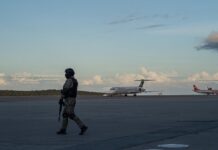

The United States and Venezuela are actively jamming GPS signals across the Caribbean, a move intended to counter potential attacks but which simultaneously increases the risk of accidents for civilian air and sea traffic. Both countries’ militaries are engaging in this practice, escalating tensions in a region already strained by political and economic instability.
US Operations: Targeting Drug Trafficking
The US Navy, including the aircraft carrier USS Gerald R. Ford, has been deploying GPS jamming technology near its warships in the Caribbean. The stated justification is to disrupt drug trafficking operations allegedly coordinated by the Venezuelan government. According to one anonymous US official, this is a direct response to illicit activities and an attempt to secure maritime routes.
However, the broader implications of jamming GPS signals extend far beyond counter-narcotics efforts. Precision-guided munitions and drone technology rely heavily on satellite navigation systems, making interference a common defense strategy.
Venezuela’s Countermeasures: Protecting Critical Infrastructure
In retaliation, Venezuela’s military has also begun jamming GPS signals around strategic locations: military bases, oil refineries, and power plants. Analysis from Spire Global, a satellite data firm, confirms this activity. The move is designed to protect against potential drone attacks or precision strikes targeting essential infrastructure.
As Logan Scott, an early pioneer in GPS receiver technology, explains, this is a defensive measure: “You’ve got a military emplacement and you want to keep drones… from getting to it.” The escalation suggests both sides view the other as a credible threat, creating a dangerous feedback loop.
Risks and Consequences
The deliberate disruption of GPS signals introduces significant hazards for civilian transportation. Airplanes and ships rely on accurate positioning data to avoid collisions, navigate safely, and maintain operational integrity. Even brief interference can lead to critical errors with potentially catastrophic consequences.
The situation also highlights a growing trend in modern warfare: the weaponization of space-based infrastructure. GPS jamming is a relatively low-cost, high-impact tactic that can disrupt operations without firing a shot. This approach raises concerns about future conflicts and the vulnerability of civilian systems to military interference.
The escalating standoff between the US and Venezuela is not just a geopolitical power play; it’s a dangerous game with GPS signals, risking civilian safety in the process. The long-term effects of this disruption remain unclear, but the immediate outcome is a more unpredictable and hazardous environment for maritime and air travel in the Caribbean.