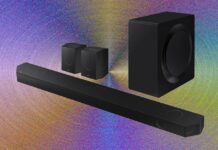




For the past five years, Samsung has effectively perfected its flagship soundbar, the HW-Q990 series. Once a 22-speaker, 11.1.4-channel Dolby Atmos system was engineered, further material improvements became marginal. The reality is that audio physics and processing reach a point of diminishing returns, and Samsung’s latest models reflect this stagnation.
Recent updates to the Q990 line—including smaller subwoofers, new software, and HDMI 2.1 ports—are incremental at best. The HDMI upgrade is useful for gamers, but the core listening experience remains largely unchanged. Experts have long advised buyers to purchase previous-year models at a significant discount because the difference in performance is negligible.
The price disparity is striking. The 2025 HW-Q990F retails around $1,800, while the Q990D currently sells for approximately $998. Testing reveals minimal differences between these iterations, and the upcoming Q990H is expected to offer only minor software tweaks.
At under $1,000 for a full 11.1.4-channel setup, the Q990D remains the best value in immersive sound. For most consumers, upgrading to newer models simply doesn’t make financial sense.
The Power of Speaker Count
Samsung’s breakthrough came with the HW-Q950T (later the Q990 series), which maximized speaker density. The design incorporated side-firing and upfiring drivers for a truly enveloping Dolby Atmos and DTS:X experience. While unconventional, the system delivered a substantial improvement in sonic immersion.
Since then, the hardware has remained largely consistent. Competitors like LG and Sonos offer strong alternatives, but none match the Q990’s performance-to-price ratio. Samsung’s dominance has allowed it to coast on its existing technology, much like a well-established political incumbent.
Innovation Stalls in Home Audio
While other tech segments see consistent advancements, the soundbar market has plateaued. TVs, for example, have seen meaningful year-over-year improvements with innovations like Micro Lens Array (MLA) panels and stacked OLED technology. Wireless headphones have also evolved rapidly, with improved noise cancellation and new form factors.
In contrast, the core technology behind soundbars—compact speakers designed to create spatial audio—has remained relatively unchanged. Netflix hasn’t significantly improved its Atmos mixes, and HDMI eARC has been a standard for years. The setup remains simple: plug in, connect via HDMI, and enjoy.
Samsung’s stagnation isn’t a failure but a consequence of reaching peak performance within existing constraints. If a product already dominates its class, further innovation becomes less urgent.
Ultimately, the Q990 series represents the pinnacle of current soundbar technology. Whether you buy a vintage 2023 model or the latest iteration, the experience will be remarkably similar. For those seeking cinematic immersion on a budget, Samsung’s older Q990 models remain the smartest purchase.