
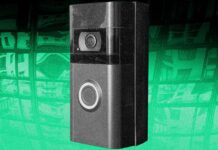



Video doorbells, initially marketed as convenience tools, are increasingly recognized as potential surveillance instruments. Recent events – from Ring’s controversial Super Bowl ad to legal cases involving law enforcement access to private footage – highlight the growing concerns surrounding data privacy and the blurred lines between home security and widespread monitoring. This article examines the risks, your rights, and how to mitigate unwanted surveillance in the age of networked doorbells.
The Expanding Surveillance Network
Ring, Nest, and other smart doorbell companies have become central figures in the debate over data collection. Despite repeated public backlash over data sharing with law enforcement, these companies continue to explore partnerships that expand their reach into surveillance networks. The Super Bowl ad featuring Ring cameras tracking a lost dog exemplified the dystopian potential of widespread, AI-powered community surveillance. While Ring temporarily paused some partnerships after criticism, experts warn that the interoperability of police devices and data streams means the fight for privacy is far from over.
Axon, a leading provider of police body-worn cameras, is developing tools to request Ring footage directly from users, reinforcing the concern that even retracted partnerships don’t eliminate the threat. Ring founder Jamie Siminoff maintains that footage requests are privacy-centric, relying on voluntary participation from homeowners. However, critics argue this overlooks the systemic pressure and potential for misuse.
Why This Matters: The Aggregation of Data
The risk isn’t just about individual footage being accessed but the cumulative effect of interconnected cameras. As Electronic Frontier Foundation (EFF) senior policy analyst Matthew Guariglia points out, “You might not mind walking past one camera, but think of what these cameras might catch in aggregate—a person’s entire day seen through hundreds of interconnected cameras.”
This data aggregation poses threats beyond simple tracking. Footage can be used for politically motivated investigations, police harassment, or even stalking, either through intentional misuse or accidental leaks. Amazon’s past privacy lawsuit settlements underscore the vulnerability of user data to breaches or unauthorized access. The recent exposure of ICE tapping into Flock Safety’s automatic license plate readers raises further questions about how video doorbell footage could be exploited.
Your Rights and Legal Protections
Legally, users are not obligated to share footage with law enforcement unless presented with a warrant or court order. Providers like Ring and Nest claim to notify users of data requests, though many never read the privacy policies that detail these practices.
Emile Ayoub of the Brennan Center warns that recording private spaces (windows, fenced yards) may be considered an invasion of privacy, while footage of public sidewalks or driveways is generally legal to share. However, this doesn’t absolve companies from responsibility for how the data is used.
The EFF argues that the increasing privatization of police surveillance gives the public less control over their information. Companies operate with limited transparency, making it difficult to determine whether warrants are required, how data is shared with law enforcement, or if user information has been compromised.
Safeguarding Your Privacy: Practical Steps
The most effective way to eliminate privacy concerns is to forgo video doorbells entirely. If that’s not an option, prioritize local storage over cloud services. Devices like the Reolink Video Doorbell ($110) and some models from Eufy (such as the Eufy Video Doorbell E340, $220) and TP-Link’s Tapo range support local recording, bypassing Wi-Fi vulnerabilities. Wired doorbells, like the Reolink PoE model, offer better reliability and security.
Avoid automatic enrollment in footage-sharing programs and scrutinize freemium deals, as these companies may use your data to train their AI algorithms. While cloud storage can enhance redundancy, choose end-to-end encrypted services to ensure only you can access your footage.
Protecting your privacy requires vigilance and informed choices. Prioritizing local storage, scrutinizing privacy policies, and understanding your rights are crucial steps in navigating the growing landscape of smart home surveillance.
Ultimately, the debate over video doorbells highlights a broader tension between convenience, security, and the erosion of personal privacy. By taking proactive measures, homeowners can mitigate some risks, but the systemic challenges require continued scrutiny and advocacy for stronger data protection laws.