




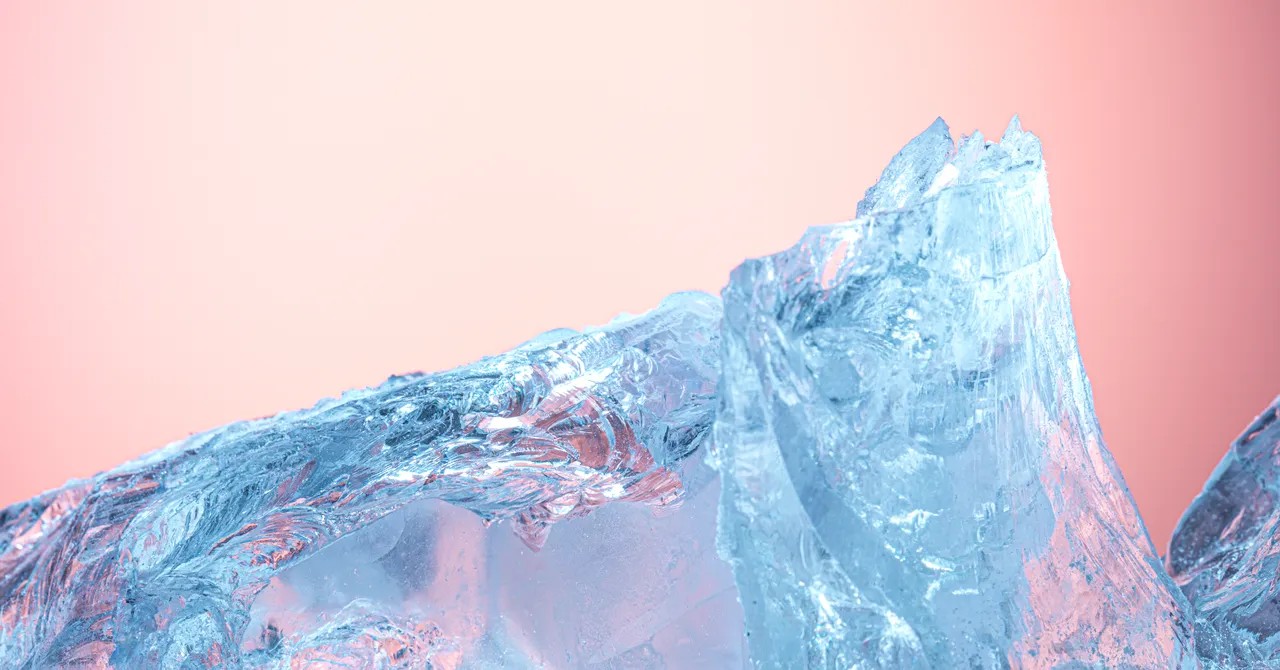
The world of high-end cocktails is currently obsessed with a peculiar commodity: luxury ice. From shipping massive blocks from Japan to the US, to harvesting lake ice in Norway with tractors, and even transporting Greenlandic glacier fragments 9,000 nautical miles to Dubai, the “frozen water” industry has become a lucrative, albeit controversial, global market.
While high-end bars market this ice through tales of “purity” and “ancient romance,” the trend raises significant questions about sustainability and the actual value being delivered to the consumer.
The Business of “Romance”
The luxury ice trade is far from a niche hobby; it is a booming sector of the hospitality industry.
– Hundredweight Ice (NYC): Harvests over 3 million pounds of ice annually, generating $3 million in 2025 revenue.
– Disco Cubes: Sells small batches of cubes for roughly $75.
– Arctic Ice: Markets Greenlandic glacial ice at $100 for six cubes.
Critics argue that this industry represents a massive misallocation of resources. Mike Berners-Lee, a prominent researcher in carbon accounting and sustainable food systems, views the industry as a “thoughtless way of spending resources,” comparing it to the vanity of space tourism. He argues that in a world facing climate crises, the luxury ice economy is a prime example of a “bullshit job” or an unnecessary expenditure of global wealth.
Science vs. Storytelling: Is Glacial Ice Actually Better?
The primary selling point for luxury ice is purity. Companies claim that ancient glacial ice is free from modern pollutants, ensuring it doesn’t alter the flavor of expensive spirits. However, science suggests that “nature” isn’t the only way—or even the best way—to achieve perfection.
Christoph Salzmann, a professor of physical and materials chemistry at University College London, explains that the “clarity” of glacial ice is simply a result of pressure forcing ice into large crystals with fewer grain boundaries.
“We can make purer ice in the lab than you would ever be able to harvest from a glacier,” says Salzmann.
In a laboratory setting, scientists can avoid the tiny gas inclusions (bubbles) that even the finest glacial ice contains. Through a process called directional freezing, water can be frozen slowly from the bottom up, pushing impurities and gases upward to create a single, perfectly clear crystal.
How to Make “Luxury” Ice at Home
You don’t need to spend $100 on six cubes to enjoy crystal-clear ice. The principles used by professional machines, like the industry-standard Clinebell machines, can be replicated with simple household items.
1. The Directional Freezing Method
Standard freezers freeze water from all sides, trapping air and minerals in the center and creating cloudy ice. To bypass this:
– Use an insulated container: A polystyrene (Styrofoam) box or a hard-sided picnic cooler works well.
– Freeze from the top down: Because the sides are insulated, the water will freeze from the top surface downward.
– Manage the impurities: As the ice freezes, it pushes impurities to the bottom. You can either remove the clear ice before it reaches the bottom or simply cut off the cloudy base once frozen.
2. Achieving Maximum Purity
To replicate the “glacial” taste, you must address both dissolved minerals and dissolved gases:
– Filter your water: Use a high-quality water filter to remove inorganic salts and metals. For extreme purity, use deionized water (often used for ironing).
– Boil the water: Boiling helps force out dissolved gases that cause cloudiness. Freeze the water immediately after boiling to prevent it from reabsorbing new gases.
– The “Bottled Water” Shortcut: Industry experts suggest that certain bottled waters, such as Crystal Geyser, often provide a high-quality baseline for making clear ice due to their mineral balance.
Note of Caution: While extremely pure (deionized) water is great for ice, it is not recommended for heavy consumption, as the lack of minerals can affect the body’s osmotic pressure. However, using it for a few ice cubes in a cocktail is perfectly safe.
Conclusion
The luxury ice industry thrives on the “romance” of remote locations, but the reality is that clarity and purity are matters of physics, not geography. By using simple insulation and controlled freezing, anyone can achieve professional-grade, crystal-clear ice at home without the environmental cost or the premium price tag.