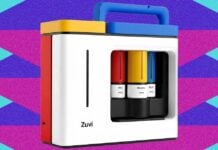


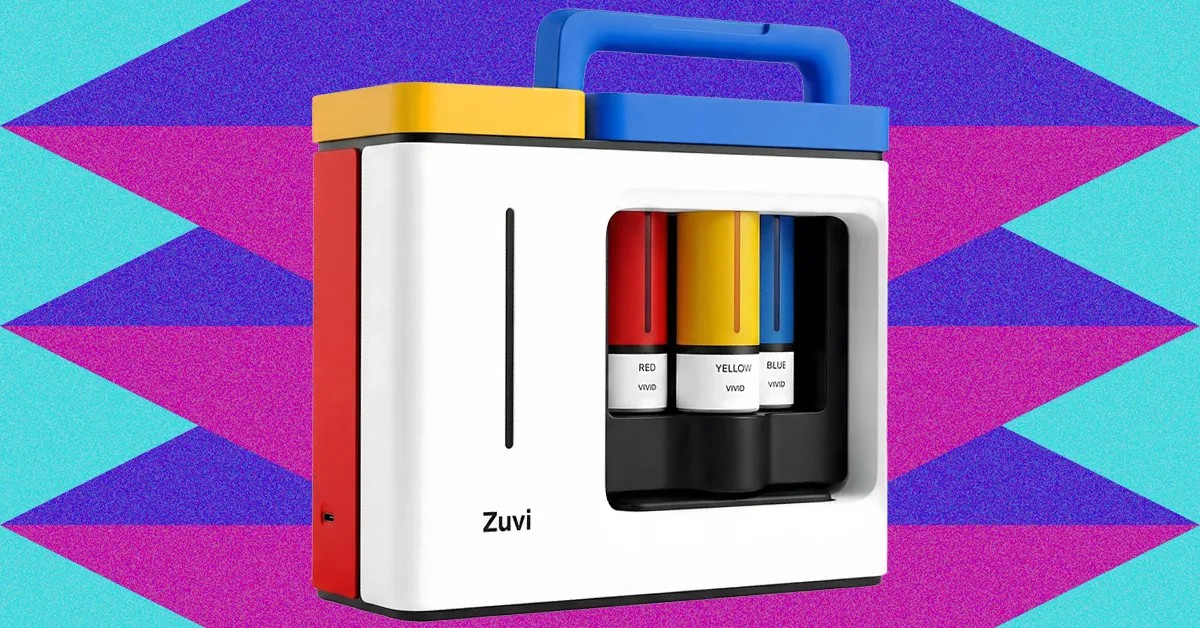
The beauty industry is increasingly turning toward “personalization” through technology—think of foundation printers that mix custom shades on demand. The Zuvi ColorBox attempts to bring this same logic to hair color, promising an at-home device that can dispense virtually any hue. However, after extensive testing, the reality of this “hair printer” falls far short of its high-tech promises.
Hardware and User Experience: Missing the Mark
While the device features a compact design and an aesthetically pleasing look, the physical components provided in the box feel underwhelming and poorly curated.
- Inadequate Accessories: The included tools—a cracked bowl, a flimsy whisk, and tiny brushes—are impractical for real hair coloring.
- Missing Essentials: In a frustrating trend for modern consumers, the device lacks a wall adapter for its USB-C cable, requiring users to source their own power connection.
- Software Hurdles: The companion app, which was in beta during testing, proved cumbersome. The color-picking interface is imprecise, lacking the intuitive “sliding” tools found in standard photo editing apps, and the permission requests for photo access felt excessive.
The Color Problem: Precision vs. Reality
The core promise of the ColorBox is the ability to replicate any shade via an app. In practice, the machine struggles with basic color theory and mechanical reliability.
1. Failure to Replicate Vivid Tones
Attempts to recreate a vibrant, neon pink resulted in nothing more than washed-out, pastel shades. Even when attempting to replicate professional dye swatches, the machine failed to dispense specific colors. In one instance, the device claimed to be 91% finished dispensing a color, yet failed to output any yellow pigment at all after ten minutes of operation.
2. The “Pastel” Limitation
The device seems fundamentally incapable of producing intense, saturated colors. No matter how the color wheel is adjusted, the output remains in the realm of diluted pastels. This is a significant issue for users seeking “vivid” fashion colors, which require high pigment density to be effective.
3. Misleading AI and Color Theory
The app relies heavily on generative AI to show potential results. This is problematic for two reasons:
– Inaccuracy: The AI-generated images show results that the hardware cannot actually produce.
– Bad Advice: The app suggests color combinations (such as pink and green) that, when mixed, result in a muddy brown rather than the “candy-colored” streaks promised by the visuals.
Context: Why This Matters for Consumers
The Zuvi ColorBox enters a market where DIY hair coloring is already highly advanced. Professional-grade semi-permanent dyes are widely available, and experienced hobbyists can achieve complex shades through manual mixing—often more reliably and cheaply than this machine allows.
Furthermore, the device introduces a “proprietary trap.” Because the machine requires specific Zuvi cartridges, the entire system becomes useless if the company ceases operations or raises cartridge prices. At approximately $22 per refill, the cost of maintaining custom colors through this machine may quickly exceed the cost of traditional hair dye supplies.
Who Is This For?
The ColorBox might find a niche audience in very specific scenarios:
– Hair Extension Enthusiasts: Those looking to tint small amounts of synthetic or natural hair extensions.
– Partial Coloring: Users who only want to change a single streak of hair without buying full-sized bottles of dye.
– Children’s Play: Parents looking for a way to “dip-dye” bleached ends for kids.
Conclusion
The Zuvi ColorBox attempts to solve a problem that doesn’t exist for most users, adding complexity and guesswork rather than removing it. For anyone seeking true color precision or vibrant fashion shades, traditional hair dye and basic color theory remain far more effective and cost-efficient options.
Final Verdict: A high-concept gadget that fails to deliver on its primary promise of color accuracy and ease of use.