



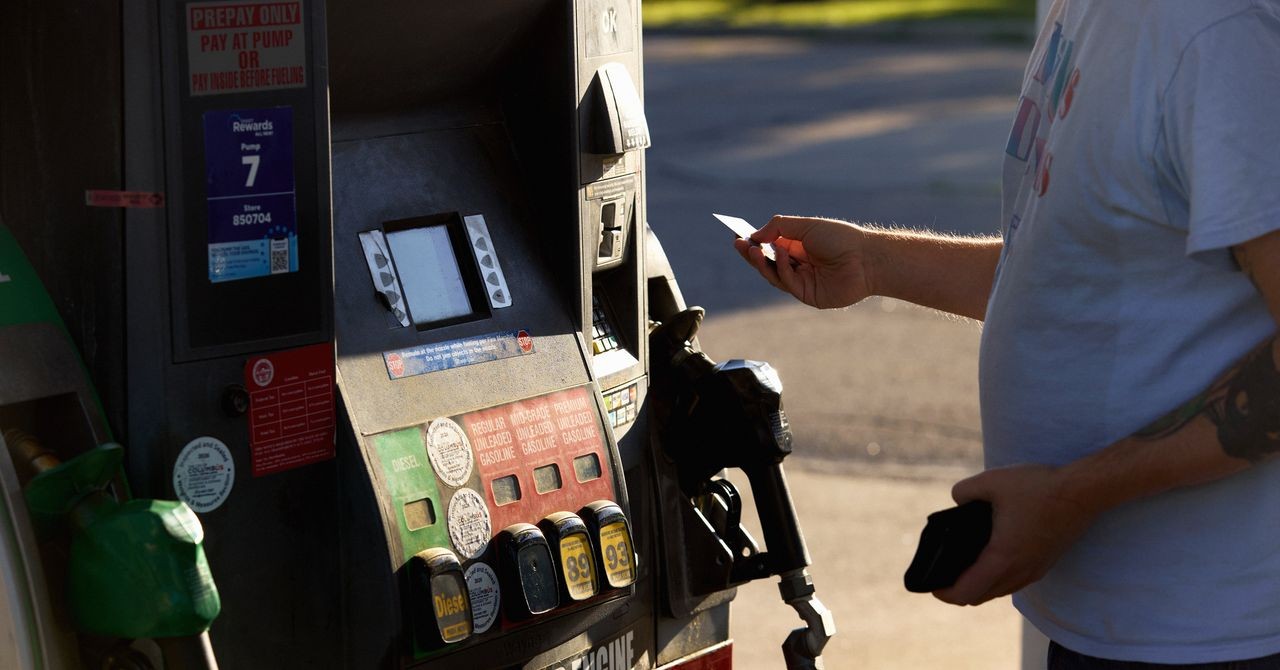
As summer travel gear up begins and consumers face stubbornly high fuel costs, political pressure is mounting to suspend the federal gas tax. President Donald Trump has voiced support for the idea, and lawmakers from both major parties are advancing legislation to implement a temporary “holiday” on the roughly 18-cent-per-gallon federal excise tax.
However, energy analysts and economists warn that this move is unlikely to provide meaningful relief at the pump. While the political optics may appeal to frustrated drivers, the structural realities of the oil market, the mechanics of retail pricing, and the critical role the tax plays in infrastructure funding suggest that a tax holiday would do little to ease the financial burden on Americans.
The Myth of Immediate Savings
The core argument for a gas tax holiday is simple: remove the tax, lower the price. But the fuel market is far more complex than a direct pass-through of federal fees.
Key Insight: Gasoline prices are determined by a volatile mix of global crude oil costs, refining margins, distribution expenses, and station operating overhead—not just the fixed federal tax.
Clark Williams-Derry, an analyst at the Institute for Energy Economics and Financial Analysis, notes that broader market forces are driving prices higher than historical averages. With Brent crude oil hovering around $105 a barrel—significantly above the 2025 average of $69—the baseline cost for gas remains elevated. Even if the 18-cent tax were removed, the impact on the final price per gallon would be marginal in the face of such high raw material costs.
Furthermore, there is no guarantee that retailers would pass the savings directly to consumers. In times of high volatility, retailers often use stable margins to offset other rising operational costs, such as labor and maintenance. Consequently, drivers might see a negligible drop in prices, if any at all.
Geopolitics and Supply Chain Realities
The current spike in fuel prices is not merely a domestic issue; it is deeply intertwined with global geopolitical tensions. Since early March, the Strait of Hormuz—one of the world’s most critical chokepoints for oil and gas transport—has been effectively closed following strikes by the US and Israel against Iran.
This disruption has sent shockwaves through global supply chains, driving up the price of not only gasoline but also diesel and commodities that rely on petroleum inputs, such as fertilizer. The resulting inflationary pressure is already being felt across the economy. In April, the Consumer Price Index rose 3.8% year-over-year, pulling up the cost of everything from food to rent to airfare.
In this context, an 18-cent reduction at the pump is a drop in the bucket. It does nothing to address the broader inflationary spiral driven by supply shortages and geopolitical instability.
The Hidden Cost: Crumbling Infrastructure
Perhaps the most significant consequence of a gas tax holiday is not what happens at the pump, but what happens on the road. The federal gas tax, unchanged since 1932, is the primary funding source for the Highway Trust Fund, which supports highway maintenance and mass transit projects.
The US infrastructure is already in a state of severe disrepair. A 2025 survey found that nearly 40% of the country’s highways and roadways are in need of repair. Williams-Derry describes the situation starkly, noting that many roads are “literally crumbling.”
Suspending the tax, even temporarily, would deepen the insolvency of the Highway Trust Fund. This creates a long-term problem for short-term political gain:
* Exacerbated Decay: Less revenue means fewer repairs, leading to worse traffic, more vehicle damage, and higher long-term costs for travelers.
* Political Trap: Once a tax is suspended, reinstating it becomes politically difficult, especially as midterm elections approach. A “temporary” break could easily become permanent, leaving future administrations with an unfunded mandate for crumbling roads.
Conclusion
While the desire to feel immediate relief from high gas prices is understandable, a federal gas tax holiday is a misdiagnosis of the problem. It fails to address the root causes of high prices—such as global supply disruptions and refining costs—while risking the financial stability of the nation’s infrastructure.
The bottom line is clear: suspending the tax would offer consumers negligible savings at the pump, while potentially accelerating the decay of the roads they drive on. It is a political gesture that looks like action but delivers little substance, leaving the underlying economic and infrastructure challenges unresolved.