


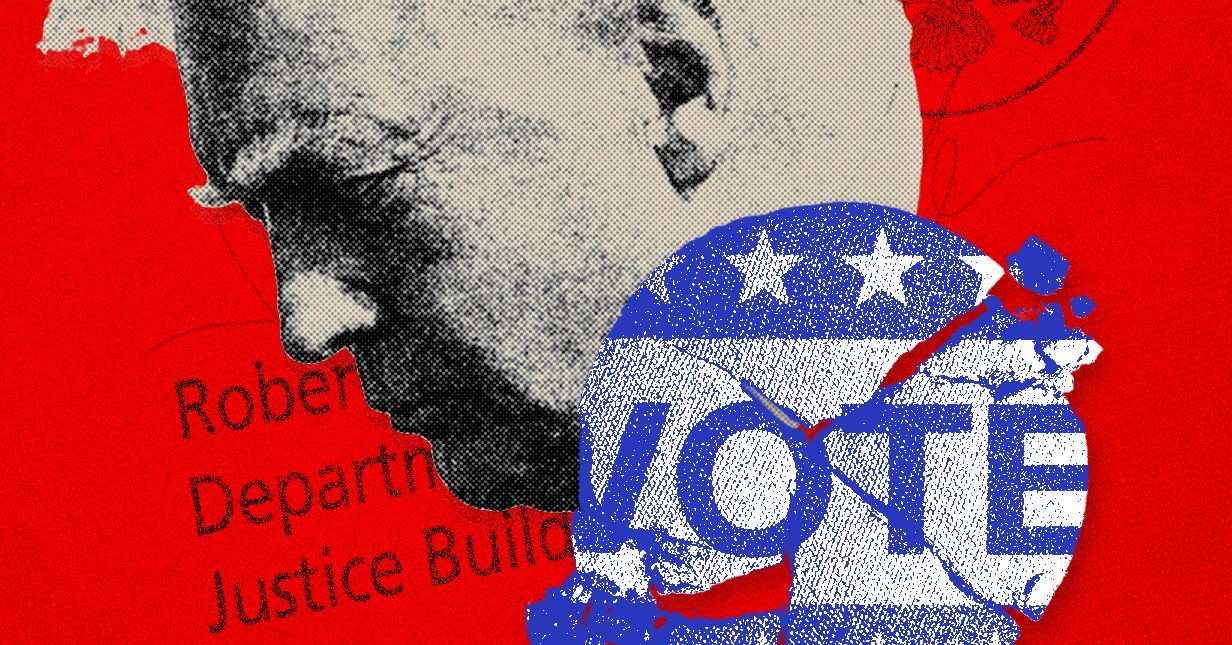
The Department of Justice’s Voting Section has long been considered the “crown jewel” of the Civil Rights Division. For decades, its mission was clear: to enforce the Voting Rights Act and protect American citizens from discrimination, intimidation, and barriers to the ballot box.
However, following the inauguration of Donald Trump in January 2025, that mission has undergone a radical and controversial transformation. According to dozens of former attorneys and legal experts, the section is no longer being used to protect voters, but is instead being repurposed as a political tool to challenge the integrity of elections and undermine state-led voting processes.
A Rapid Depletion of Expertise
The transition within the department has been swift and, according to insiders, highly orchestrated. At the start of 2025, the Voting Section was staffed by approximately 30 experienced attorneys. Within just three months, that number plummeted to only two.
This exodus was not merely a result of natural turnover. Former employees describe a systematic effort to purge seasoned leadership:
- The “Bondi Blasts”: Shortly after Pam Bondi was confirmed as Attorney General, she issued memos requiring DOJ lawyers to “zealously advocate” for the President’s policies, a directive that many felt conflicted with their duty to the law.
- Forced Transfers: Assistant Attorney General Harmeet Dhillon, who oversees the Civil Rights Division, reportedly used administrative transfers to push out senior managers. These veterans were reassigned to unrelated offices—such as the Bureau of Prisons complaint adjudication office—effectively forcing their resignations.
- Loss of Institutional Knowledge: The departure of lawyers who had served since the 1980s has stripped the section of “encyclopedic knowledge” regarding legal precedents and federal statutes.
A New Guard with a Different Agenda
To fill the vacuum left by veteran civil rights lawyers, the administration has hired a new cadre of attorneys. Many of these individuals have backgrounds that were previously at odds with the DOJ’s mission.
The new hires include:
– Former Election Deniers: Lawyers who previously represented efforts to challenge the 2020 election results.
– Partisan Advocates: Individuals with deep ties to conservative think tanks and legal groups that have spent years suing election officials for access to voter rolls.
– Inexperienced Personnel: Many of the new recruits lack significant federal court experience, leading to a noticeable decline in the quality of legal work.
This shift is reflected in the section’s new mission statement, which reportedly de-emphasizes the enforcement of the Voting Rights Act in favor of “voter integrity and transparency”—a pivot that aligns with an executive order aimed at collecting unredacted voter rolls for use by the Department of Homeland Security and the Department of Government Efficiency (DOGE).
The Cost of Inexperience: Procedural Failures
The replacement of seasoned litigators with political appointees has resulted in a string of high-profile errors in federal court. Legal experts note that the department is currently struggling with basic professional standards, including:
- Clerical Errors: Misspelling names of state officials and basic words like “voters” or “United States” in official filings.
- Procedural Blunders: Filing lawsuits in the wrong jurisdictions, missing crucial deadlines, and providing “inaccurate representations” to judges.
- Factual Mistakes: Requesting records from the wrong election year (e.g., citing 2000 instead of 2020) and citing incorrect legal provisions.
The decline in quality was so pronounced that the Civil Rights Division reportedly implemented a “remedial writing course” for its staff—a move veteran lawyers say is unprecedented in the history of the department.
Why This Matters
The restructuring of the Voting Section represents more than just a change in personnel; it represents a fundamental shift in how federal power is applied to American elections.
By moving away from the enforcement of civil rights protections and toward a focus on accessing sensitive voter data, the DOJ risks shifting from a neutral arbiter of federal law to a participant in political disputes over election legitimacy. If the section’s goal is to generate “fodder” to challenge state-run elections, the long-term impact could be a permanent erosion of trust in the democratic process.
“The DOJ was where the best lawyers went to practice on behalf of the American people,” says David Becker, former senior trial attorney. “The only criteria for working there now is loyalty to the president.”
Conclusion
The systematic replacement of career civil rights lawyers with political loyalists has transformed the Voting Section from a protector of the franchise into a vehicle for executive policy. This shift raises critical questions about the future of election integrity and the ability of federal institutions to remain independent from political influence.