




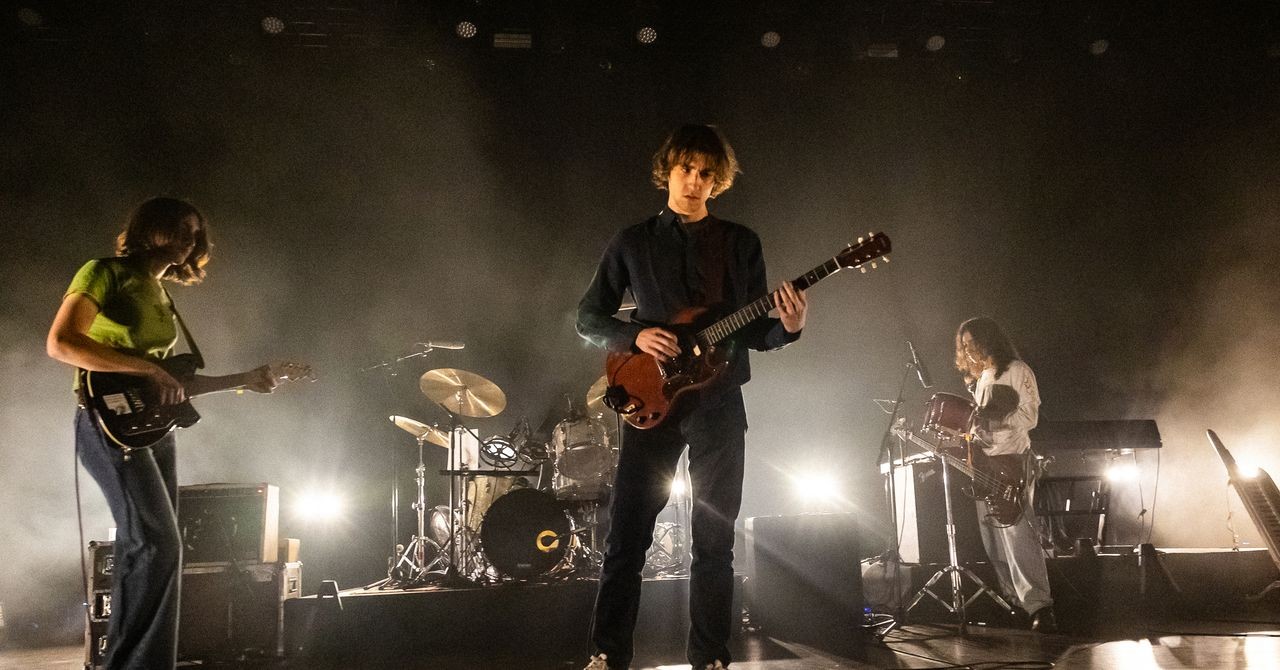
The rapid ascent of the Brooklyn indie rock band Geese at the end of 2025 felt, to many, like a glitch in the matrix. After their fourth album, Getting Killed, dominated year-end lists and secured high-profile slots at Coachella and Saturday Night Live, skeptics began whispering a familiar accusation: “Industry plant.”
While critics dismissed their rise as an inorganic fluke, recent revelations suggest those suspicions weren’t entirely unfounded. The frenzy surrounding the band was, in part, the result of a highly sophisticated digital architecture designed to manufacture the appearance of a grassroots movement.
The Mechanics of “Trend Simulation”
At the heart of this controversy is Chaotic Good Projects, a digital marketing firm specializing in what they call “digital experiments and musical mayhem.” In a recent appearance on Billboard’s On The Record podcast, the firm’s founders pulled back the curtain on their methodology, a process they term “trend simulation.”
Rather than relying on traditional PR, Chaotic Good utilizes a vast network of social media pages—primarily on TikTok—to manipulate recommendation algorithms. Their tactics include:
- Algorithmic Injection: Placing artist clips into the backgrounds of trending videos to trigger platform discovery.
- Narrative Campaigns: Using “User-Generated Content” (UGC) to create a sense of organic excitement.
- Ecosystem Fabrication: Creating clusters of accounts, comments, and interactions to stoke—and sometimes entirely manufacture—public discourse.
By flooding the digital space with these interactions, the firm can push an artist higher up the rankings of platforms like TikTok and YouTube, which have become the primary engines for music discovery.
The Ethics of the “Fake Fan”
The connection between Geese and Chaotic Good was brought to light by singer-songwriter Eliza McLamb, whose viral Substack post, “Fake Fans,” sparked a heated debate regarding the ethics of modern stardom. McLamb pointed out the inherent distortion these tactics create: “If 100 people think your song sucks, Chaotic Good will create 200 people who think your song is awesome.”
In response to the backlash, Chaotic Good’s Adam Tarsia confirmed they engineered campaigns for both Geese and frontman Cameron Winter. However, the firm has since scrubbed mentions of these artists from its website, claiming they did so to protect their partners from “false accusations.” Tarsia maintains that their work is limited to “digital PR strategy” and denies the use of bot farms or the artificial inflation of streaming numbers.
A New Era of Industry “Payola”
This controversy highlights a shifting landscape in the music business. While the industry once relied on “payola”—the practice of bribing radio DJs with gifts or cash—the modern equivalent is much more subtle and harder to track.
“Everything on the internet is fake,” one Chaotic Good partner noted, suggesting that in a digital-first world, the line between organic popularity and engineered trends has effectively vanished.
This evolution raises critical questions for the industry:
- The Credibility Gap: For “indie” artists, whose brand is built on authenticity and “hard-earned” credibility, being labeled as a manufactured product can cause irreparable reputational damage.
- The Algorithmic Arms Race: As platforms become more crowded, artists may feel forced to adopt these “sinister” tactics just to cut through the noise.
- The Death of Discovery: If “discovery” is actually a simulated trend, the concept of a “breakout star” becomes a manufactured metric rather than a cultural phenomenon.
Conclusion
The Geese controversy reveals that the modern path to stardom is increasingly paved by sophisticated digital architects rather than mere luck. As “trend simulation” becomes a standard marketing tool, the industry faces a growing crisis of authenticity, where the line between a genuine fan base and a programmed narrative continues to blur.