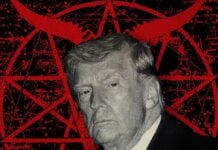



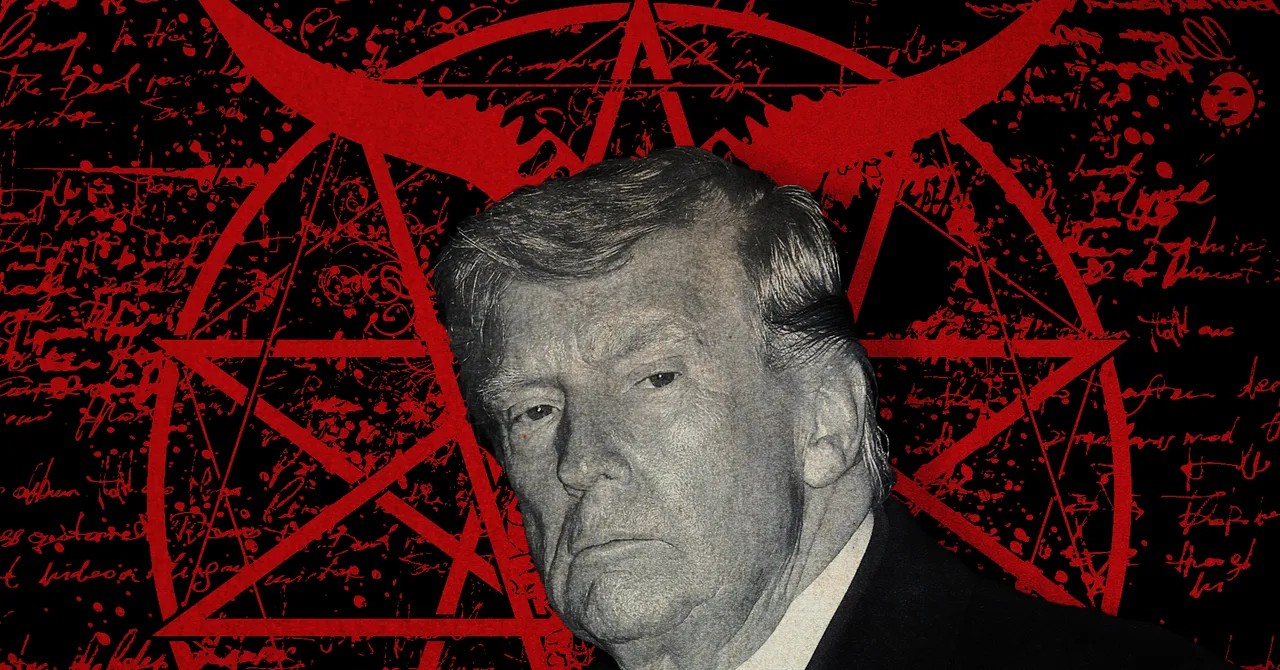
A profound ideological rift is opening within the MAGA movement. Once defined by the belief that Donald Trump is a divinely appointed leader, a growing faction of his most ardent religious supporters is now accusing him of something much darker: being the Antichrist.
This shift from religious devotion to theological condemnation marks a significant turning point in the relationship between the former president and the Christian voters who have long been a cornerstone of his political strength.
The Catalyst: AI Imagery and “Blasphemy”
The current crisis was ignited by a controversial, AI-generated image posted by Trump on Truth Social. The image depicted Trump in a white robe and red sash, placing a hand radiating golden light onto a patient in a hospital bed—a visual composition that closely mirrors traditional iconography of Jesus Christ.
While Trump later deleted the post and claimed he simply intended to portray himself as a “doctor making people better,” the reaction from his own camp was swift and severe:
- Political figures: Congresswoman Marjorie Taylor Greene labeled the imagery as an “Antichrist spirit.”
- Media influencers: Podcast host Clint Russell admitted his view shifted from hesitant support to believing there is a “decent chance” Trump is the Antichrist.
- Religious leaders: Texas pastor Joel Webbon claimed Trump is “demon possessed,” and the Knights Templar Order issued a formal condemnation, demanding a public apology.
A Pattern of Religious Friction
This is not an isolated incident of religious tension. The friction appears to be the result of a growing pattern where Trump’s rhetoric and actions clash with traditional Christian and Catholic values:
- Conflict with the Vatican: Trump has recently been openly critical of Pope Leo XIV, calling him “weak on crime” and criticizing his stance on foreign policy, particularly regarding Iran.
- Aggressive Rhetoric: On Easter Sunday, Trump used aggressive language regarding Iran, including threats of destruction and a provocative “Praise be to Allah,” which many observers saw as a direct affront to his Christian base.
- Diplomatic Tension: Reports of a high-stakes meeting between U.S. officials and the Vatican’s ambassador—where the U.S. allegedly pressured the Pope to align with American military ambitions—have further strained relations with the Catholic Church.
Why This Matters: The Political Stakes
The transition from seeing Trump as a “divine instrument” to a “demonic figure” is more than a theological debate; it is a political crisis.
For years, the MAGA movement has relied on religious fervor to mobilize voters. However, by adopting messianic imagery himself, Trump has inadvertently provided the tools for his critics to turn that same fervor against him. As Robert Jones of the Public Religion Research Institute notes, Trump “set the stage” for these accusations by frequently portraying himself in quasi-divine terms.
The core risk lies in the Catholic vote. Historically, white Catholics have been a reliable pillar of support for Trump, often voting for him at rates of roughly 60%.
“If he alienates Catholic voters, many of whom are his supporters, it could be very detrimental,” warns Jones.
Conclusion
The emergence of “Antichrist” rhetoric among MAGA supporters signals a breakdown in the religious consensus that once unified Trump’s base. As the movement grapples with these theological accusations, the resulting schism threatens to undermine the very religious coalition that has been essential to his political survival.