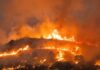


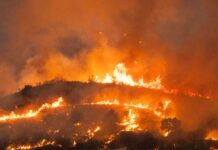
The sky above France isn’t just smoky. It’s broken.
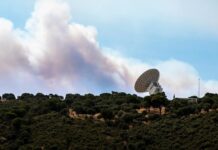
In what meteorologists are calling a first, the country recorded a pyrocumulonimbus cloud—a thunderstorm born entirely from the heat of wildfires below. It is a terrifying confirmation that extreme fire conditions on the ground are directly shattering the rules of the upper atmosphere.
This isn’t just a summer spike. It’s a structural shift.
How Extreme Heat Creates Atmospheric Bombs
You might think of a storm as a weather event. These fire-induced clouds are weaponized weather.
As heat rises from blazes like those ravaging France and Spain, it creates a powerful updraft. This draws in more oxygen, fueling the fire which in turn creates more heat. The cycle spins up until the plume breaks through the tropopause—the boundary between the troposphere and the stratosphere—into the colder, stable air above.
There, the moisture freezes. Ice crystals form. And suddenly, you have lightning, hail, and strong winds generated purely by combustion.
“Extreme fire conditions on the ground have created unprecedented conditions in the atmosphere.”
The irony? These storms often blow rain away from the fire or evaporate it entirely before it hits the ground. They don’t put out the fire. They feed it.
The New Arms Race in Wildfire Combat
If the sky is turning against us, the tools we use to fight back have to evolve.
Climate change is upping the odds. The window for “major wildfires” is getting wider, more intense, and less predictable. Old tactics rely on containment lines and water drops. Those aren’t enough when the atmosphere itself becomes an enemy combatant.
Enter new firefighting technologies.
We’re talking about satellite-based thermal imaging that can detect hotspots before they breach containment. Autonomous drones that can fly into smoke-choked zones to map fire behavior in real-time. AI-driven predictive models that forecast wind shifts down to the minute, not the hour.
The goal isn’t just suppression. It’s prediction. We need to know where the pyrocumulonimbus clouds will form so we can evacuate before the lightning strikes.
A Climate Tipping Point
This atmospheric anomaly is a signal.
It shows us that we are no longer dealing with “bad fire seasons.” We are dealing with a new climate reality. The feedback loop between heat and weather is accelerating.
When a cloud forms from fire, it changes the local climate for weeks. The soot it deposits in the stratosphere can linger, affecting sunlight absorption and temperature patterns globally.
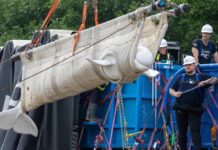
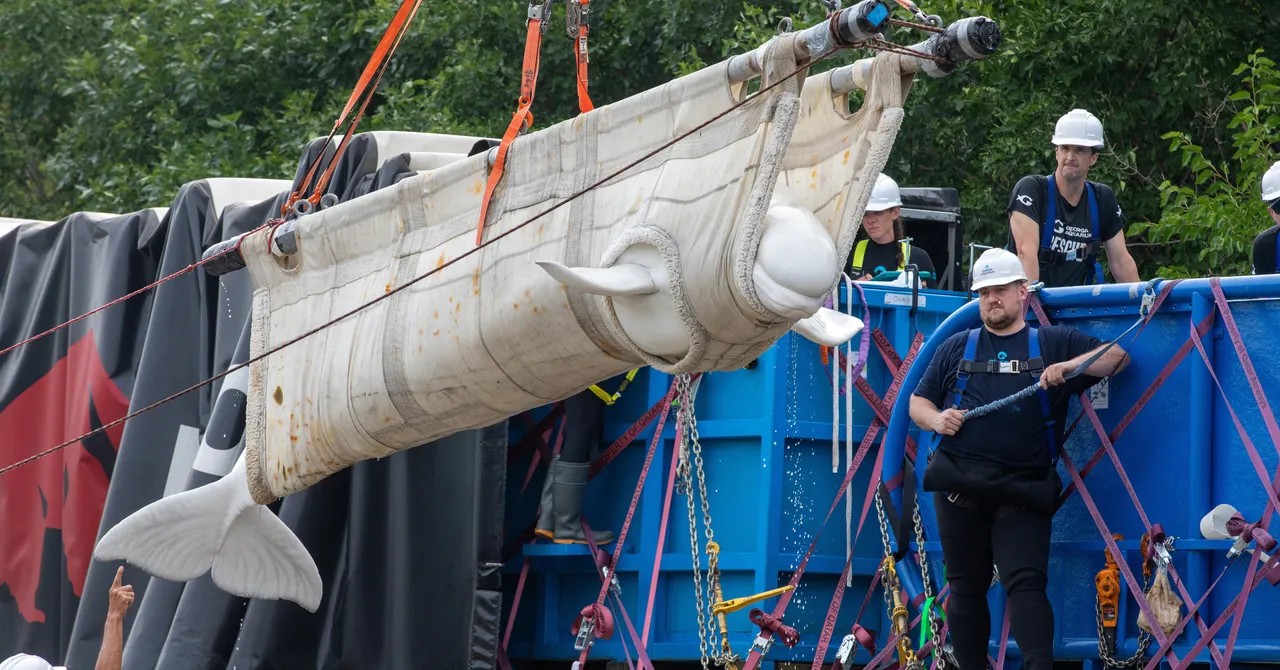
The rescue missions for beluga whales might make for better headlines, but this atmospheric upheaval is the real story. The whales are a tragedy of human error. The burning sky is a tragedy of human scale.
We have the tech. We have the science.
Do we have the will?