


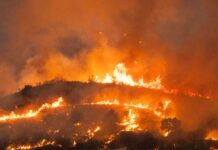
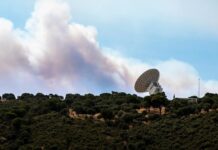
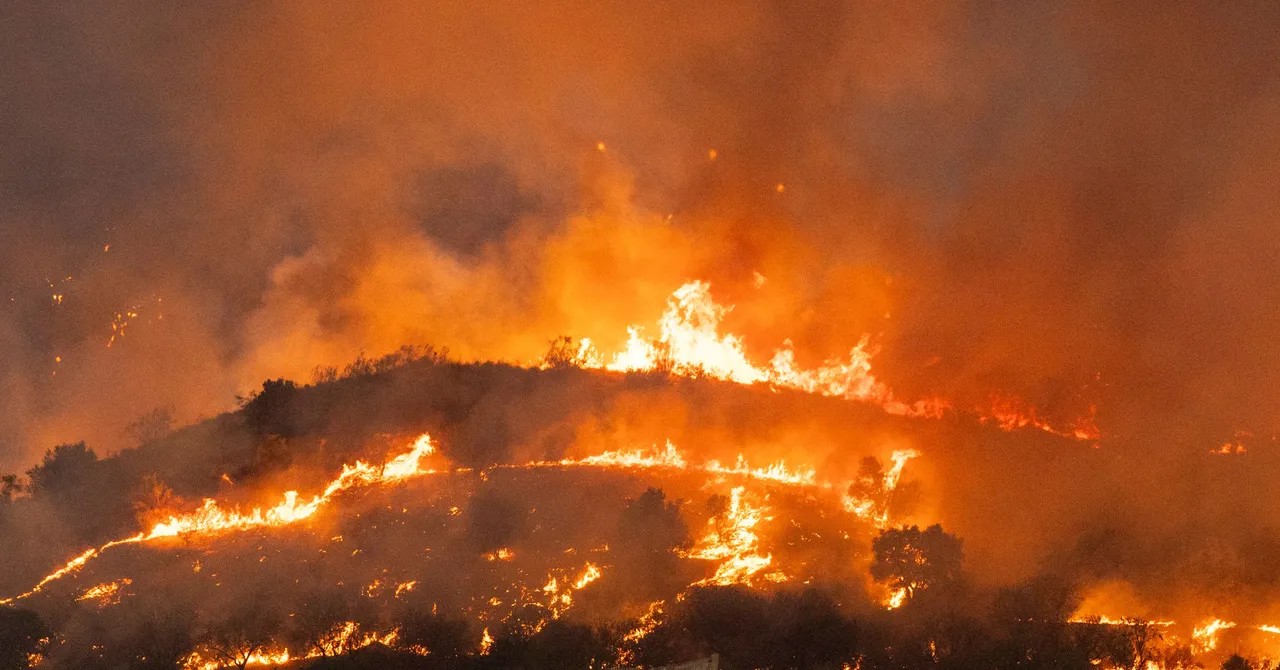
Spain is on edge. The government has declared a national emergency across Madrid and Ávila. The blazes are spreading. And they aren’t stopping.
This season is tracking to be one of the worst on record. Prime Minister Pedro Sánchez didn’t sugarcoat the crisis. He called it a dramatic situation spanning not just Spanish provinces but neighboring regions too. He said all available resources are deployed—from León to Toledo. The stakes are high. The heat is extreme.
France isn’t faring better. Massive fires there have actually spawned their own weather systems. According to the European Forest Fire Information System, these two countries alone have burned over 741,000 Acres. That is a lot of land. Hundreds of thousands of people were forced to evacuate. In Spain, the burned area is double the annual average. In France? The fire season has been six times worse than normal.
Why is this happening? Extreme heat. Dry weather. Vegetation primed like tinder. Climate change is driving this pattern globally. As megafires grow, firefighters are looking for new ways to stop them. Spain is leading the charge. They’ve developed several technological innovations to prevent, detect, and control these disasters.
Biodegradable Gel Outperforms Water
Meet Ecofire. It’s a biodegradable liquid. It uses 100 percent organic substances mixed into a water-based formula. But don’t let “water-based” fool you. It is up to 40 times more effective at extinguishing fire than plain water. It also works six to ten times faster.
The product can also be sprayed on vegetation before a fire starts. It creates an insulating layer. This layer blocks heat and oxygen. It stops combustion from even starting at temperatures of 100°C (212°F) or higher. Simple. Effective.
AI Predicts Wildfire Spread Early
Once a wildfire explodes, it is nearly impossible to manage. That is why prediction is everything. Predifire, an early-warning system supported by the University of Córdoba, aims to fix the timing issue. If you spot a fire early, you don’t spread your resources too thin.
Predifire uses artificial intelligence. It pairs that with sensors and autonomous drones. The system can identify fire outbreaks when they are only a few acres wide. The goal is simple: reduce response time. Facilitate early intervention. Beat the blaze before it beats you.
Smart Sensors for Real-Time Monitoring
Predifire isn’t the only system in play. SenForFire is another project in the works. It involves the Spanish National Research Council and the University of Extremadura. It uses wireless networks of low-cost, smart sensors.
These devices measure environmental variables and combustion gases in real time. They also track weather conditions. By combining these data points, the system can predict the onset or progression of a fire before it becomes uncontrollable. It’s about seeing the warning signs when they are still small.
Neural Networks Estimate Fire Behavior
Researchers funded by the Ministry of Science and Innovation are using a Wildfire Assessment Model. This isn’t just guesswork. It’s an AI model using neural networks.
It analyzes atmospheric variables. It also looks at satellite imagery to gauge how “green” the vegetation is. From there, it estimates several critical factors: how far the fire will spread. How long it will take to contain. How many ground, human, or aerial resources will be needed. This allows emergency planners to allocate resources in high-risk areas with precision.
Tools for the Public to Stay Safe
Technology helps firefighters, but it also helps the public. Spain’s government offers an official Civil Protection app. It gives access to emergency info. It shows warning maps. It connects you to emergency services.
You don’t need a specialized app, though. Google Maps now features a layer for Spain. It triggers emergency alerts. It displays fire perimeters. There is also Incendios Spain. This platform provides a real-time map of active wildfires across the country using satellite feed data.
If you live near a fire zone, knowing where the fire is matters. Really matters.
This crisis highlights a broader global shift. We are seeing more megafires. The tools to fight them are evolving. Spain’s approach—combining biodegradable gels, AI predictions, and smart sensors—is being tested as a model. It remains to be seen if this will be enough as climate change accelerates. But for now, it is something.