



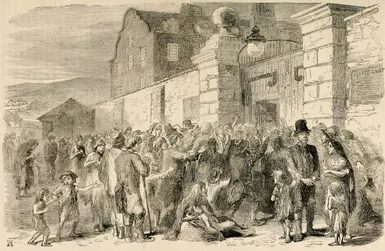
During the Irish potato famine (1845-1849), the image of the narrow, dark workhouse is etched in history not only as a place of suffering, but also as a tangible mechanism of economic control. This is not charity work. This is a deterrent.
In finance and public policy, “aid” has always meant aid to those crushed by forces beyond their control, such as war, floods, or a complete market collapse. But the definition changes depending on who you ask and when.
Development of emergency aid
Before the advent of modern social safety nets, disaster relief efforts were chaotic. They relied on local councils to rush to distribute food, clothing and medical supplies. They rely heavily on voluntary donations from nearby towns and far away countries. The International Red Cross, founded in the 1860s, eventually became a key driving force in achieving this goal, especially in combat zones.
But what about financial assistance? The rules are different.
Public programs aimed at economic needs have their roots in Elizabethan England. These early relief efforts were meager and questionable in design. The prevailing perception was that handing out handouts to able-bodied workers was morally corrupt. It promoted laziness.
Workhouse requirements
This suspicion became law. In Britain, the ill-fated Poor Law Reform Act of 1834 changed the situation. If you are able to work, you will not receive benefits. You entered the workhouse.
The workhouses were a form of punishment disguised as help. It is designed to be unattractive and only the truly desperate seek it out. This creates a continuing cultural divide between the “deserving” poor (those who cannot work) and the “undeserving” poor (those who, in the eyes of the state, can work but choose not to).
This attitude did not disappear even as industrialization progressed. It has evolved.
Employment assistance and modern change
In the 20th century, “work assistance programs” began. The United States has not completely abandoned this shame. It simply monetizes the work.
Take, for example, the Works Progress Administration (WPA), which was introduced in the 1930s. It’s not just about handing out cash. This offers employment opportunities to all able-bodied people. target? Distinguish between the working poor and the permanently “deemed unemployed”. It was a way to maintain work ethic while dealing with mass unemployment during the Great Depression.
By the end of the 20th century, most countries abandoned strict labor requirements in favor of general subsidies. The stigma remains, but the mechanics have changed.
Today, “welfare” usually refers to public assistance provided to poor people who are not eligible for certain Social Security benefits. Usually it’s money or goods, not work. The stigma remains. Probably not.
Why do we still associate help with work? Because the fear of dependency is deeper than economic logic.
“Public programs to alleviate financial need… are characterized by severe limitations.”
There is a fine line between support and guidance. The people who hold the purse strings pull it.
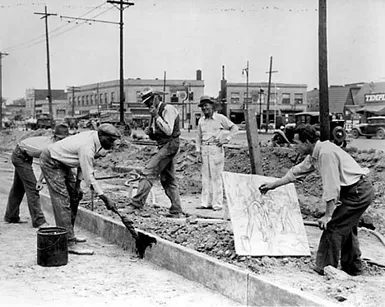
The photo of Michigan artist Alfred Castagne standing among WPA construction workers in 1939 is more than just a historical snapshot. This work captures a particular moment in American history when government intervention had a direct impact on cultural outcomes. The National Archives and Records Administration preserves this history and keeps it rooted in Washington, D.C., but its impact is felt by local workers and artists.
Mechanisms supported by federations
Why would the government pay artists to sketch construction sites? The answer lies in the structure of the Works Progress Administration (WPA). Founded in 1935, the WPA was one of the largest New Deal agencies. Its goal is simple but ambitious: to provide jobs for millions of unemployed Americans.
Artists were also not immune to the economic devastation of the Great Depression. They face the same market failures as factory workers and farmers. The WPA solved this problem by creating the Federal Arts Project (FAP). The initiative finances studios, supplies material and commissions public works.
Castagne’s 1939 drawings represent the culmination of this monumental work. By then, the WPA had produced millions of works of art. These include paintings, sculptures and murals. There are two intentions. First, it saves artists’ jobs. Second, art takes you to places you’ve never seen before. Public buildings, post offices and schools were converted into galleries. This democratization of art was a radical idea at the time.
Economic impact and cultural heritage
How does this money translate into real value? The economic argument is simple. Every dollar spent on artist salaries circulates in the local economy. The materials have already been purchased. The studio is available for rent. These artists spent their income on food, housing and goods. This synergy helps stabilize the community.
However, cultural heritage is more difficult to measure. FAP creates a diverse mix of American life. It captures urban centers, rural landscapes and industrial areas. Castagne focuses on construction workers, emphasizing the physical labor involved in rebuilding infrastructure. These images are a visual record of the earth’s transformation.
Critics often argue that federal funds distort markets. They believe that art should survive on its own merits. But in the 1930s, the market collapsed completely. Without the WPA, many artists would have given up their art altogether. Governments don’t just protect art. It preserves its own profession.
Comparison of public and private sponsorship
Which model is suitable for supporting artists? History offers a clear comparison. In the 1930s, personal patronage was limited to the wealthy elite. Most artists cannot rely on sales. WPA provides the foundation for security. This allows artists to experiment. I was not forced to paint only what was sold.
This freedom expands the range of styles. Realism, socialist realism and modernism were favored. The diversity of the collection reflects the diversity of the artists at work. WPA does not require a single aesthetic. to provide a platform.
Where did this money go? The program officially ended in 1943 with changes due to World War II priorities. These works of art are kept in public institutions. They become part of the national heritage. Today, they are valued not only for their beauty, but also for their value.