

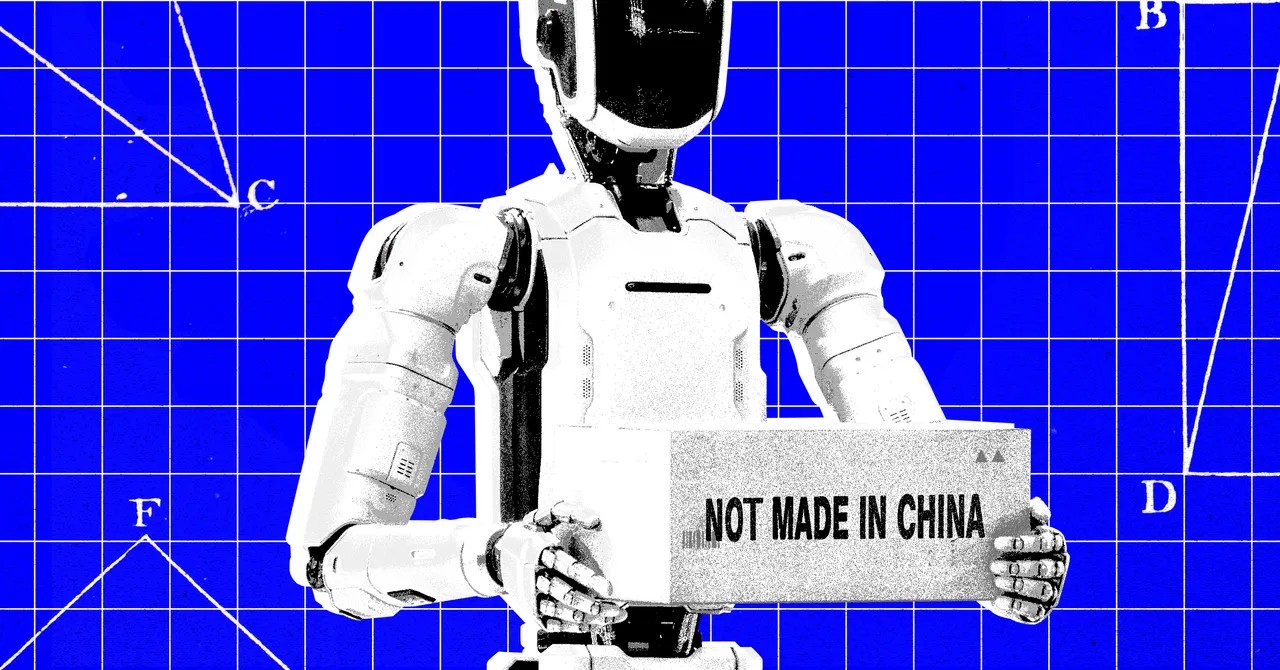
US regulators have banned Chinese-made robots. The FCC’s new restrictions on humanoids and advanced devices aim to close a national security loophole, but the side effect is a sudden supply chain crisis for the American robotics sector.
Most US-based firms are in trouble. They design in America but build their hardware in China. They don’t have a Plan B.
But there’s a loophole for some. Saurabh Chandra, founder of Ati Robotics, sees an opportunity. His company builds mostly outside of China.
While most US startups focus on software, Ati focused on steel, motors, and batteries. It’s an expensive game. But while others scramble to find parts, Ati is shipping units.
How India’s EV Boom Built Ati’s Advantage
Building robots from scratch usually requires deep pockets. Chandra found a shortcut.
Ati Robotics was founded in 2017. They started by making motors for self-driving cars. The research and development happens in Bangalore, India.
Why Bangalore? Because it was already deep in an electric vehicle revolution. The city was churning out two-wheeler and three-wheeler EVs. The power profiles of those vehicles matched Ati’s robotics needs almost perfectly.
“Typically, automotive parts are very reliable and produced in large volumes… good and cost-efficient.”
This wasn’t just a cost-cutting measure. It was a strategic pivot. By leveraging the existing automotive supply chain, Ati avoided the high cost of custom-manufacturing every single component from zero. They had to engineer some adjustments, sure. But the base components were cheap, reliable, and everywhere.
The result? A supply chain that didn’t look at China for the big ticket items.
Which Robot Is Actually China-Free?
Not all Ati robots are equal. Chandra calls it “supply chain resiliency.” It varies by model.
The champion of the roster is the 10,000-lb tugger. This robot pulls trolleys through warehouses, moving raw materials from store to factory line. It is, for all intents and purposes, China-free.
The battery cells? Those still come from China.
Can they switch? Chandra says they can source from South Korea or Japan “tomorrow” if needed. Those are passive components. The rest of the tugger doesn’t rely on Chinese supply chains.
The pallet mover is close behind. Less than 5% of its parts are Chinese. The one exception is the lidar sensor. It’s a solid-state unit. There’s no viable alternative right now.
Then there’s the humanoid.
It’s coming later this year. It’s designed to move heavy bins. The full arm is built in Bangalore. The actuators too. But some parts still have ties to the East. The harmonic drive comes from China. The frameless motor? For now, China too.
But Ati is looking deeper into the motor stack. They use induction motors. This means no magnets. Chinese magnets. That’s a deliberate choice. Most robot makers use brushless motors with Chinese magnets.
Induction motors are less efficient. Yes. But you can trade efficiency for more battery life. It’s a different engineering philosophy.
The Humanoid’s Roadmap to Independence
Ati isn’t optimizing its supply chain for the humanoid yet. They are focused on getting the robot to work.
Gears are a current bottleneck. They come from China today. But gears also exist in Germany, Taiwan, and Japan. They are just more expensive elsewhere. Ati is aware of this. They plan to pivot when it makes sense.
It’s early days. The humanoid is just the first step.
Who Wins When the Ban Hits?
The industry is in denial.
Chandra heard the complaints a couple of months ago. Executives in Washington were lobbying hard to prevent the ban. It didn’t work.
Now? They’re realizing the truth. The regulation doesn’t ban all Chinese parts. But it creates enough uncertainty that companies will struggle. Most US-robotics companies invented their robots here but manufacture them abroad.
That’s a vulnerability.
Ati is an “accidental beneficiary.” They didn’t set out to be immune to geopolitical risk. They just built a different company. But the result is the same: resilience.
Other players will see gains too. Tesla’s Optimus. Figure, which manufactures in the US. Even European robotics firms that kept their supply chains localized.
Chandra isn’t selling his supply chain as a marketing feature. Customers haven’t demanded it as an explicit buying criterion. But they notice. It influences decisions.
It’s not magic. It’s just different.
As the dust settles, the question isn’t who will suffer the most. It’s who will adapt the fastest.
Ati is setting up a facility in Madison Heights, near Detroit. They’ll assemble their robots there eventually. Currently, Bangalore handles the heavy lifting. But the shift is happening.
Will this ban fix US manufacturing? Probably not entirely. But it might wake people up.
“Maybe more people will be encouraged to make [robots] locally, which is not a bad thing.”
At least a few companies will survive the shock. Others will have to rethink their entire existence.
The robots are rolling out. The parts are sourced. The ban is law.
The only thing left to see is who actually delivers.