

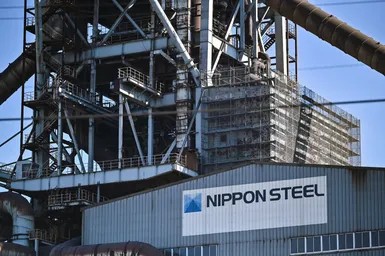
Nippon Steel isn’t just a factory with a lot of smokestacks. It is the world’s second-largest steelmaker by volume, a title it clawed back after decades of global upheaval. The most significant chapter in its modern history involves the June 2025 acquisition of U.S. Steel. This $14.9 billion deal didn’t just shuffle market share; it triggered a political firestorm, required a unique “golden share” compromise, and reshaped the industrial landscape of North America.
The story of how Nippon Steel got here is one of government planning, wartime destruction, aggressive modernization, and a pivot toward sustainability that kept it relevant when Chinese producers took over raw volume.
From Imperial Trust to Global Titan
The roots of Nippon Steel go back to the late 19th century. In 1896, the Japanese government set up a steelmaking bureau. Five years later, the Imperial Japanese Government Steel Works started up in Yawata, northern Kyushu. Private competitors emerged in the following decades, but the state wanted control.
In 1934, the Diet passed legislation creating Japan Iron & Steel Co., Ltd. This was a massive trust combining the Yawata works with six private firms: Wanishi, Kamaishi, Fuji, Kyushu, Toyo, and Mitsubishi. By 1939, it was a juggernaut of modern integrated steelworks. Then came World War II. Bombings and supply chain collapses broke the operation. The Allied occupation authority dissolved the trust in 1950, splitting its assets into four private companies, including Yawata and Fuji Iron & Steel.
The Korean War changed everything. The Japanese economy boomed, and the 1950s and 60s saw exploding global demand for cheap steel. Yawata and Fuji didn’t just survive; they modernized. They built large-scale integrated mills and improved raw material treatment.
In 1970, Yawata and Fuji merged to form Nippon Steel Corporation. The move consolidated resources. By the early 1970s, the company had a steelmaking capacity of 47 million tons per year. In 1975, it passed United States Steel Corporation to become the world’s largest producer.
Diversification in a Shrinking Market
The 1980s brought a different reality: declining worldwide demand for steel. Nippon Steel couldn’t just build more mills. It had to cut capacity and diversify.
The company pivoted toward engineering, chemicals, and high-tech innovation.
It invested heavily in eco-friendly steelmaking methods. It developed advanced high-strength steels for the automotive and construction sectors. This shift wasn’t just about survival; it was about moving up the value chain.
By the late 1990s, the dynamic shifted again. Chinese steel producers began to surpass traditional leaders in total crude steel production. Nippon Steel remained in the top five globally, but volume was no longer the sole metric of power. It made key investments in Asia, Europe, and North America. In 2012, it merged with Sumitomo Metal Industries, further consolidating its position in the Japanese market and strengthening its global footprint.
The U.S. Steel Acquisition: Politics, Money, and Veto Power
The most dramatic event in Nippon Steel’s recent history is the takeover of U.S. Steel.
In December 2023, Nippon Steel announced a $14.9 billion cash-and-debt deal to acquire the American firm. U.S. Steel had aging infrastructure but controlled valuable assets in a protected market. The deal faced immediate scrutiny. It wasn’t just a business transaction; it became a national security issue.
President Joe Biden and then-candidate Donald Trump both opposed the takeover. Shareholders approved the deal in 2024, but the Biden administration blocked it. Lawsuits followed. Negotiations dragged on.
The resolution came with the start of Donald Trump’s second presidential term. He reopened the review and approved the transaction in June 2025. The approval came with a unique condition: a golden share agreement. This gave the U.S. government veto power over major corporate strategy decisions.
The financial terms were specific. Nippon Steel pledged $11 billion through 2028 to modernize U.S. Steel’s domestic mills. This included $1 billion for a new U.S. mill. Total investment in that specific project was expected to rise by an additional $3 billion in the coming years.
The United Steelworkers union opposed the deal over job security concerns. But the deal closed on June 18, 2025.
What This Means for the Market
The acquisition established Nippon Steel as the world’s fourth-largest steelmaker by volume. It is now the second-largest among non-Chinese producers.
The move highlights a shift in global steel dynamics. Volume is no longer enough. Technology, sustainability, and access to protected markets matter more. Nippon Steel’s history shows it can adapt from state-controlled trusts to diversified global corporations. The U.S. deal tests whether it can manage a complex political environment while maintaining industrial efficiency.
The golden share arrangement is unusual. It suggests that even in a globalized economy, national security concerns can override pure market logic. The government retains a hand on the steering wheel. Nippon Steel gets the assets. The workers get uncertainty. The market gets a reshuffled deck.
Does this model work long-term? Other companies might watch closely. If Nippon Steel can modernize U.S. Steel’s infrastructure while navigating political headwinds, it sets a precedent. If it struggles, the cost of cross-border industrial consolidation rises significantly.
The steel industry is cyclical. Demand will fluctuate. Geopolitics will remain unpredictable. Nippon Steel is now bigger than it has been in decades. It has the capacity. It has the technology. It has the government’s blessing, with strings attached. The execution will determine if the deal creates value or just complexity.