



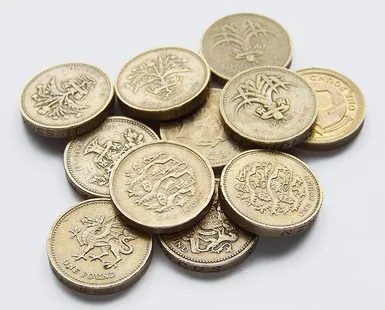
The pound sterling serves as the foundational monetary unit for Great Britain, but its origins are far older than its modern decimal structure. The name itself is a linguistic fossil, tracing back to the Saxon era around 775 AD. During this period, silver coins known as “sterlings” were minted across various kingdoms. The logic was straightforward: 240 of these coins were struck from a single pound of silver. That weight closely matched what later became known as the troy pound.
Because large transactions were frequently calculated by the weight of silver required, the phrase “pounds of sterlings” entered common usage. Over time, the redundancy dropped away, leaving just “pounds sterling.” This etymological shift marks the first major step in how the currency evolved from a commodity-based system to a unit of account.
The Pre-Decimal Structure
Following the Norman Conquest, the accounting framework for the currency became more rigid. The pound was divided into 20 shillings, which in turn were split into 12 pennies. This resulted in a total of 240 pence in one pound. It was a complex system that required mental gymnastics for everyday commerce, but it persisted for centuries.
This structure also birthed the symbols still in use today, derived from medieval Latin terminology:
- Libra (the pound) gave us the £ symbol.
- Solidus (the shilling) led to the abbreviation s.
- Denarius (the penny) resulted in the letter d.
These abbreviations were practical for scribes recording ledgers. The d for pence, for instance, might seem confusing today, but it directly references the Roman denarius, highlighting the deep historical roots of British financial notation.
The Shift to Decimalization
The transition from the £sd system to a decimal format was a significant administrative milestone. On February 15, 1971, the pound sterling was officially decimalized. The old system was replaced by a structure where the pound is divided into 100 new pence. This change aligned the UK with a global standard that simplified calculations for consumers and businesses alike.
Despite the structural overhaul, certain elements remained constant to ensure continuity and recognition. The £ symbol was retained as the primary identifier for the unit. For the new penny, the letter p was selected to distinguish it from the old pre-decimal pence while maintaining a clear link to its predecessor.
Today, the pound sterling remains one of the oldest currencies still in circulation. Its history reflects a broader narrative of economic adaptation, moving from physical silver weights to abstract accounting units, and finally to a decimal system designed for modern efficiency. The question isn’t just about what the pound is worth now, but how a currency defined by the weight of a single metal has survived millennia of political and economic upheaval.