



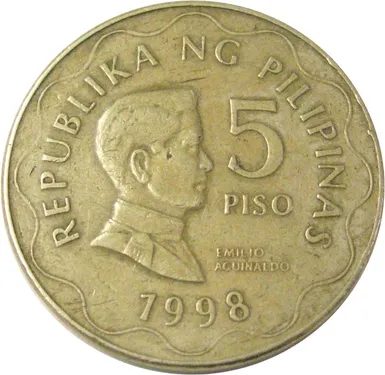
You hold a coin. It says five pesos. If you are in the Philippines, that is pocket change. If you are in Mexico, it is roughly nine cents. If you are in Colombia, it is less than a penny.
The word is the same. The value is a joke.
This isn’t a glitch. It is history. And it is messy.
The peso didn’t start in Latin America. It started in Spain. King Ferdinand and Queen Isabella tried to fix the coinage system in 1497. They introduced the peso. Nobody really used it then. It took Charles I—also known as Charles V the Holy Roman Emperor—to push it into common use.
By the late 1700s, the Spanish empire reformed its money again. Between 1772 and 1786, the peso became the backbone of silver coinage across the colonies.
The birth of the dollar and the peso split
Here is the part that surprises people.
The “peso” was originally divided into eight reales. In the Americas, they called it a “piece of eight” or a “Spanish milled dollar.”
Yes. That dollar.
It was the equivalent of the U.S. silver dollar. The United States based its currency on this very coin. While the Americas broke away from Spain, most kept the basic unit. But then came independence. And with it, the ego of new nations.
When these countries switched to a decimal system, they wanted their own names. They kept the math but changed the label.
Look at the map.
- Peru chose the sol.
- Venezuela picked the bolivar.
- Ecuador went with the sucre.
- El Salvador and Costa Rica adopted the colón.
- Panama uses the balboa.
- Honduras has the lempira.
- Guatemala chose the quetzal.
- Nicaragua uses the córdoba.
- Bolivia has the boliviano.
Others stuck with the original name. Argentina, Chile, Colombia, Cuba, Mexico, and Uruguay still call their money the peso.
Even in the countries that officially changed the name, people often still say “peso” in casual speech. Habits die hard.
Spain left the room
Spain itself didn’t keep the peso.
In 1859, Spain adopted the peseta. They kept it as the main unit until 2002. Then the euro took over. The peseta vanished. The peso? It survived in the colonies that became independent nations.
The peso is less a currency and more a shared linguistic heritage. It is the monetary unit of several Latin American countries and the Philippines. It is divided into 100 centavos.
This structure is consistent. The inflation is not.
If you are trying to understand why your five pesos buys different things in different places, remember this: the name is historical. The value is political.
The coin looks the same. The empire is gone. The money remains.
Which one holds its value better? That is a question for another