




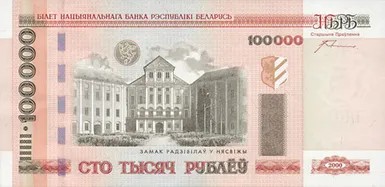
The ruble is the official monetary unit of Russia, while Belarus uses the rubel (a variant spelling). These two currencies share deep historical roots in the former Soviet Union, yet they have diverged significantly in modern monetary policy, inflation history, and central bank operations. Understanding their distinct trajectories is essential for anyone analyzing Eastern European financial markets or the legacy of Soviet-era monetary systems.
The Origins and Evolution of the Russian Ruble
The term ruble originally referred to a silver weight, a designation that dates back to the 13th century. It wasn’t until 1704 that Tsar Peter I introduced the first regular minting of the silver ruble. During the 18th century, the metal content of the coin was debased, reducing its intrinsic value. By the middle of the 19th century, paper money had largely replaced silver coins in daily circulation, driven by rapid depreciation.
A major shift occurred in 1897 when a gold ruble replaced the silver standard, marking Russia’s transition to the gold standard. This stability was short-lived. Early in World War I, gold coins vanished from circulation, and paper notes became inconvertible. The Russian Revolution and subsequent civil war triggered inflation of astronomical proportions, rendering the ruble virtually worthless.
To restore order, a monetary reform took place in 1922–1923. This reestablished a structured monetary system by introducing the chervonets as the standard unit for state bank note issuance. The chervonets ruble, defined as one-tenth of a chervonets, became the unit of reckoning, while the term “ruble” remained the denomination for treasury notes and silver coins. After World War II, another reform in 1947 abandoned the chervonets standard and restored the ruble as the sole monetary unit.
How the Soviet Dissolution Reshaped Currency in Russia
The Russian ruble is divided into 100 kopecks. The Central Bank of the Russian Federation holds the exclusive authority to issue all banknotes and coins in Russia. Current banknote denominations range from 5 to 5,000 rubles. The obverse of these notes features significant cultural and historical landmarks, including:
– A bridge over the Yenisey River in Krasnoyarsk
– The Bolshoi Theatre building in Moscow
– A monument to Peter the Great in Arkhangelsk, pictured against a sailing vessel
– A monument to Yaroslav I in Yaroslavl
Coins are issued in denominations from 1 to 50 kopecks, as well as from 1 to 25 rubles. When the Soviet Union dissolved, the Russian ruble replaced the Soviet ruble at parity. However, the 1990s saw the currency battered by hyperinflation. To reset the monetary system, the old ruble was replaced at a rate of 1,000 to 1 in the late 1990s.
The rapid depreciation of paper money in 19th-century Russia and the hyperinflation of the 1990s demonstrate the fragility of fiat currency when decoupled from stable monetary policy.
The Belarusian Rubel: A Separate Currency Path
The rubel is the currency unit of Belarus. The National Bank of the Republic of Belarus has the exclusive authority to issue banknotes and coins in the country. The Belarusian rubel replaced the Russian ruble as the official currency in 1992.
However, the monetary landscape in Belarus was fluid during the mid-1990s. When Russia and Belarus signed an agreement to establish a “ruble zone,” the Russian ruble was temporarily reintroduced as the currency in Belarus. This arrangement was short-lived. In 1994, the Belarusian rubel once more became the country’s sole currency.
This distinction is critical for financial analysis. While both currencies share etymological and historical lineage, they are legally distinct, issued by separate central banks, and governed by different monetary policies. The 100,000-rubel banknote issued by Belarus in 2005 is a tangible example of the rubel’s evolution, reflecting the high denominations that became necessary to manage inflation in the post