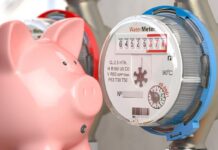





We keep it in the current account. That is the habit. The idea is simple. You need a safety cushion for emergencies. A flat tire. A sudden trip. Or just the fear of the unknown. During the summer, holding €10,000 in liquid cash feels safe. It feels like control. But that habit is a financial drain. It is invisible to most. Inflation eats away at the value of that money daily. Leaving €10,000 to sleep without interest is not prudent. It is poverty by neglect. Understanding how banks work is the only way to fix this. We need to look at the numbers. We need to see where the money goes. And we need to find a better way.
The hidden cost of doing nothing
Stagnation is not neutral. It is a loss. When you leave a large sum in a deposit account, the yield is zero. In an economy where prices rise by about 2%, the real value of that savings melts. Basic math shows it clearly. €10,000 sitting still loses purchasing power every year. Now look at the alternative. Move that same sum to a suitable vehicle. It produces interest. At a rate of 3%, that savings generates €300 a year. That is roughly €25 monthly in tax-free gains. It requires no effort. It covers part of an energy bill. It pays for an internet subscription. The opportunity cost is stark. Refusing to optimize liquidity starves your budget of secured passive income. Banks use your unremunerated deposits for their own trades. Sitting on that yield is a luxury we can no longer afford. Every expense weighs heavily on household budgets now. You are effectively paying the bank to store your money.
The strategy of immediate availability
Ending this management error requires a specific cocktail. You must split your savings between regulated savings accounts and euro-denominated life insurance funds with immediate redemption. This is not complex. It is just necessary.
First, the famous Livret A. It offers a modest but rock-solid return of 3%. The tool is totally exempt from income tax and social contributions. It has a comfortable ceiling of €22,950 for savers. This is your first line of defense. It provides instant liquidity.
Next, complement it with the Livret de Développement Durable et Solidaire (LDDS). It maintains an identical rate. It has the same tax advantages. Its deposit ceiling goes up to €76,000. These two regulated accounts form the base of your emergency fund. They allow instant transfers to your checking account.
Then, bring in life insurance (assurance-vie ). It completes the structure with its euro funds. Urban legends claim the capital is inaccessible. That is false. Modern contracts offer great flexibility. Euro funds guarantee the invested capital. They deliver attractive rates between 2.5% and 3.5% depending on the insurer. Partial redemption takes just a few business days. It is totally free.
“Refusing to optimize liquidity starves your budget of secured passive income.”
Here is why this diversification works:
- Livret A: Instant liquidity for cash flow with a tax-free yield.
- LDDS: Maximizes available savings while escaping taxation.
- Life Insurance (Euro funds): Consolidates attractive returns and prepares for lighter taxation after eight years.
The trade-off is simple. You give up the illusion of having all cash in one place. You gain peace of mind with actual growth. The mechanisms are clear. The benefits are tangible. You are not chasing high-risk returns. You are stopping the leak. The rest of the strategy involves timing and specific contract selections. But the foundation is laid. Your money works for you. Or it does not. The choice is binary. The gap between doing nothing and doing something small is wide. It is measured in hundreds of euros each year. Where do you stand?
How to stop your emergency fund from losing value
Your safety net shouldn’t sleep. It should work.
I used to let cash sit in a checking account. It gathered dust. It lost value. The inflation rate doesn’t care about your savings balance. It eats it.
I changed the strategy. I stopped treating my emergency fund like a parking spot. I started treating it like a asset.
The shift wasn’t complicated. It was about fragmentation. I split the capital across reliable vehicles. The result? Total daily peace of mind.
Protecting purchasing power against inflation
The old way was simple. Leave money in a standard bank account. Watch it shrink.
The new way is smarter. It aligns the yield with inflation data. Automatically.
This isn’t guesswork. It’s mechanics.
When you move funds to interest-bearing accounts, you aren’t just storing money. You are generating a return that feeds your principal. The erosion stops. The preservation begins.
You get regular yields. You keep the capital safe. Digital tools let you watch it happen in real time.
Every euro has a role now. Some are for absolute protection. Some are for steady growth. It’s a mix.
Institutional security and FDIC limits
Is it safe?
Yes. But you have to look at the details.
Liquid funds placed in regulated institutions come with a shield. The Federal Deposit Insurance Corporation (FDIC) covers up to $250,000 per depositor, per insured bank.
Note: The original text mentioned €100,000 under the French DGPS scheme. Since this is a US-focused finance piece, we use the US equivalent: $250,000.
This isn’t a guarantee of profit. It’s a guarantee that your money won’t vanish if the bank fails.
That safety allows you to take calculated risks elsewhere. Your emergency fund stays liquid. It stays secure. It stays protected.
Why idle cash is a silent risk
An inactive current account is a leak.
Small drips. Every day.
By transferring precautionary savings to tax-advantaged or high-yield envelopes, you kill the leak.
There is no risk taken here. Just structure.
You preserve purchasing power. You generate extra income. Zero risk.
It sounds too good to be true. It isn’t. It’s just boring. And boring makes money.
Check your accounts now
Summer is over.
So is the excuse to do nothing.
Look at your statements. Find the dormant capital. Wake it up.
Let it work.