



Palestinian memory is vanishing. Fast. Since October 2027, the looting and destruction accelerated, prompting a shift. A team in the occupied West bank decided to build something that couldn’t be seized.
A digital archive.
“Within a week, Israel bombed two galleries, seven museums, archives, hundreds of sites,” Amer Shomali says. He’s the general director of the Palestinian museum. “Trying to erase Palestinian memory—it’s not theoretical.”
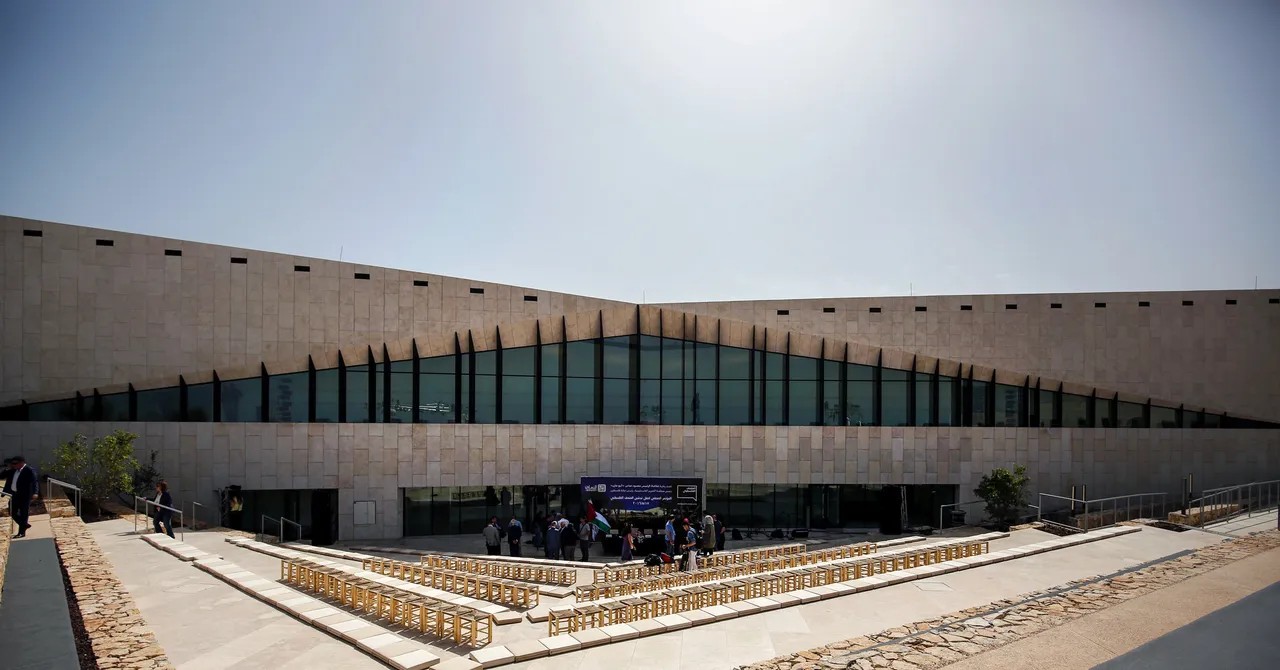
Roughly 80 percent of national collections are gone or under control. Destroyed. Lootered. Trapped. The Palestinian Museum in Birzeit is the counter-move.
Designed by Heneghan Peng Architects—New York based, also did Egypt’s grand museum—the building holds physical artifacts. Photographs by Khalil Raad. Murals by Vera Tamari. It sits defiant among native flowers, terraces cascading down hills. But it’s hard to get to. Checkpoints everywhere.
2025 saw a report: 2,400 archeological sites in West bank taken over by Israel. Reuters said in June 2024 that Israeli lawmakers want to move ancient sites under the Israeli Ministry of Heritage. Annexation in practice. Palestinian heritage? Just another asset to capture.
By March 2026, Unesco had verified damage to 164 sites in Gaza since 2023. Museums. Religious spots. Homes. War brings mass displacement. Whole communities erased. Many personal histories lost with them.
Shomali remembers the constant battle since 1948? Yes. Always there.
“We document. They loot. But every time we document? With less vivid memory.”
That’s why tech became essential. In 2018, the project began. The goal? An unlootable archive. Digital. Beyond the reach of walls, bullets, checkpoints.
What started as knocking on doors—asking families to scan photos, letters, old ID papers—exploded into the region’s biggest digital preservation project. The open-source Palestinian Museum Digital Archive now holds:
- 500,00+ digitized photographs
- ID papers, diaries, maps
- Films and letters
Many collected directly from families. Otherwise, lost. The mission? Preserve history. Give access. Especially to those who can’t visit.
The team? Three full-timers dedicated to digitization and metadata. Volunteers support. Funded by diaspora donations. Partners include UC and Gerda Henkel. They even explore an AI bot that reads Ottoman Arabic. Linguistic proofreading is extensive. It’s a massive effort.
The strategy isn’t just preservation. It’s survival.
Communities under threat are building distributed archives now. Outliving war. Displacement. Destruction. For Shomali, it’s about reclaiming history. Bottom-up. No state involved.
“A web of information… rewriting history… from below.”
To stay alive online? Multiple copies worldwide. A distributed system. If one server dies, others remain. Cyberattacks are monthly.
“Every month… attacked. Site goes down. Reinitiate from backups. Can’t stop hacks. Can stop it from disappearing.”
One idea was genius? Simple? Yes. “An exhibition in a box,” Shomali calls it. IKEA-style DIY kits for Palestine history. Download. Print. Hang. Exhibit anywhere. Any budget.
Done over 260 times. From Japan to San Francisco. Five languages.
Curator Leyya Mona Tawil? She used the archive in May 2026. Her show My Name is Palestine: Echoes ran in San Francisco. Music focused.
People cried? A lot. Thankful.
“They came out in tears,” Tawil notes. “Thank you.”
She only saw a fragment. Just a sliver. Yet even that shifted her perspective. Deeply. It wasn’t just objects. Or dead music. It was a society. Living. Under threat.
The archive keeps moving. Expanding. Surviving. Not in a vault. On the net.
For now.