




The lion roars, the screen fades in, and you are transported to a different era of Hollywood. It was a time when Metro-Goldwyn-Mayer wasn’t just a studio. It was the industry. For a brief, blinding window in the 1930s and ’40s, MGM held the reins of global cinema. They were the largest. The most profitable. The default destination for anyone who wanted to see a movie.
This wasn’t luck. It was a machine.
The Anatomy of a Monopoly
The story starts with Marcus Loew, a man who understood the power of the exhibitor. He didn’t just want to show films. He wanted to control them. In 1920, he bought into Metro Pictures. That was the first brick.
Four years later, the puzzle pieces shifted. The studio merged with Goldwyn Productions. The physical hub? Goldwyn Studios in Culver City, right near Hollywood. That location would become the beating heart of the operation for decades.
Then came the big merger. In 1925, Louis B. Mayer Pictures joined the group. Mayer took the helm as executive head. He stayed for 25 years. Under his watch, the studio stopped being a collection of disjointed projects. It became a brand.
And then there was Irving Thalberg.
Thalberg was a creative force with terrifying authority. He was young. He was brilliant. And he had the power to reedit any MGM film before it ever reached an audience. He died in 1936, but his influence lingered. It was the blueprint for the “MGM style.”
The Star Factory
You can’t talk about MGM without listing the names. The studio didn’t just hire actors. They signed them. For varying lengths of time, the following faces were under contract:
- Greta Garbo
- John Gilbert
- Lon Chaney
- Norma Shearer
- The Barrymores (Ethel, Lionel, and John)
- Joan Crawford
- Jeanette MacDonald
- Clark Gable
- Jean Harlow
- William Powell
- Myrna Loy
- Katharine Hepburn
- Spencer Tracy
- Judy Garland
- Mickey Rooney
- Elizabeth Taylor
- Gene Kelly
- Greer Garson
That list isn’t exhaustive. It’s a sampling of the talent that made the studio dominant. Think about the chemistry. Hepburn and Tracy. Crawford and Gilbert. They didn’t just act together. They defined genres.
The Hits That Defined an Era
The films themselves tell the story of the studio’s reach. They weren’t just making money. They were setting the cultural standard.
Consider the list of critical and commercial successes:
- Grand Hotel (1932)
- David Copperfield (1935)
- The Good Earth (1937)
- The Women (1939)
- The Philadelphia Story (1940)
- Mrs. Miniver (1942)
- Gaslight (1944)
- The Asphalt Jungle (1950)
These weren’t just movies. They were events.
Then there
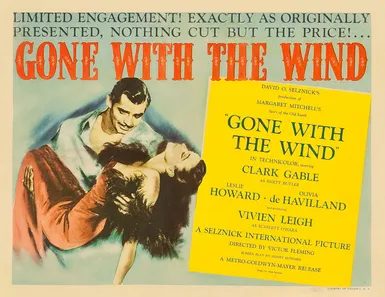
MGM built its legend on the back of spectacle. While Gone with the Wind (1939) directed by Victor Fleming remains a towering piece of cinema history, the studio’s true commercial engine was its musical lineup. These weren’t just films. They were elaborate productions that defined the golden era of Hollywood entertainment.
The list of MGM musicals reads like a roll call of cinematic giants. The Wizard of Oz arrived in 1939, setting a high bar for fantasy and song. By 1941, Ziegfeld Girl brought Broadway glamour to the screen. The studio kept the momentum going through the mid-century with Meet Me in St. Louis (1944) and Till the Clouds Roll By (1946).
You can trace the evolution of the genre through their output. Easter Parade (1948) and On the Town (1949) showed a shift toward more dynamic, modern settings. Then came the adaptations: Annie Get Your Gun in 1950, followed by the epic Show Boat in 1951. Same year, An American in Paris proved the studio could still dominate the awards season.
The early 1950s were particularly productive. Singin’ in the Rain (1952) stands as an anomaly—still widely considered the greatest musical ever made. The Band Wagon (1953) and Kiss Me Kate (1953) followed, keeping the formula fresh even as tastes began to change. The era stretched on with Silk Stockings (1957) and closed out the classic period with Gigi (1958). Each film required massive budgets, precise coordination, and a willingness to invest in star power. The result was a brand identity that audiences recognized instantly.
The Slow Fade of a Hollywood Giant
The golden age wasn’t just a memory by the 1950s. It was slipping away. MGM, once the undisputed king of Hollywood, began to show its cracks. The studio’s decline was steady. Then came the management chaos of the 1960s.
They still made hits. Doctor Zhivago dropped in 1965. Kubrick’s 2001: A Space Odyssey followed in 1968. These were prestige films. High budgets. Big names. But the business model was breaking.
Diversification or Desperation?
By the 1970s, the strategy shifted from filmmaking to asset stripping. MGM sold off its most valuable holdings. What remained wasn’t a pure production studio. It diversified into hotels. Casinos. Non-film ventures that had nothing to do with celluloid.
It was a pivot born of necessity. The film business was too risky. Real estate seemed safer. Or so the logic went.
The United Artists Connection
This era also defined MGM’s financial entanglements. From 1973 onward, the studio entered various financial associations with United Artists Corporation. It wasn’t a clean merger. It was a complex web of shared interests.
Why did this matter? It signaled the end of MGM as an independent powerhouse. The studio became part of a larger, murkier corporate structure. The magic was gone. The machinery remained.
What Remains
The legacy of this period isn’t in the films. It’s in the cautionary tale. A studio that once defined cinema lost its way by chasing outside revenue streams. The assets were sold. The management churned. The films continued.
But the center could not hold.