
Siemens AG stands as a titan of German engineering, but its current structure is relatively young. The entity known today was forged in 1966 through the merger of three distinct predecessors: Siemens & Halske AG, Siemens-Schuckertwerke, and Siemens-Reiniger-Werke AG. Headquartered in Munich, the conglomerate now operates in over 200 countries and regions. Its portfolio is massive, spanning power generation, energy management, transportation, telecommunications, and medical technology.
Despite its recent corporate formation, the roots of the business stretch back to the mid-19th century. The original firm, Telegraphen-Bau-Anstalt von Siemens & Halske, was established in Berlin in 1847. Werner von Siemens, along with his cousin Johann Georg Siemens and partner Johann Georg Halske, aimed to build telegraph installations. The strategy was aggressive. The company rapidly extended telegraph lines across Germany. By 1855, it had opened a branch in St. Petersburg. London followed in 1858, led by Werner’s brother, William Siemens.
Growth brought internal friction. As the company adopted mass production techniques, co-founder Halske pulled out in 1867. He was less interested in the aggressive expansion that defined the rest of the Siemens dynasty. Control passed to the four Siemens brothers and their descendants.
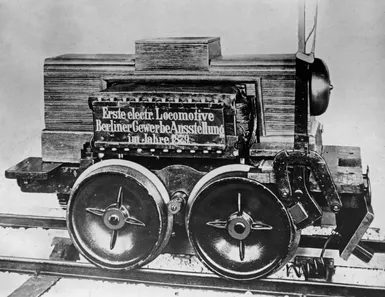
The product line diversified quickly. The firm moved beyond telegraphs into dynamos, cables, telephones, and electric lighting. These were not incremental improvements but foundational technologies of the later Industrial Revolution. In 1890, the structure shifted to a limited partnership. Senior partners included Carl Siemens, Arnold Siemens, and Wilhelm Siemens. By 1897, it became a limited-liability company, Siemens & Halske AG.
Separation of duties followed. In 1903, Siemens & Halske spun off its power-engineering activities into a new entity, Siemens-Schuckertwerke. This move absorbed the Nürnberg-based firm Schuckert & Co. From 1919 onward, both major companies were typically chaired by the same individual, always a member of the Siemens family.
Medical technology emerged as another pillar. In 1932, Siemens merged with Erlander firm Reiniger Gebbert & Schall to form Siemens-Reiniger-Werke AG. This division focused on diagnostic and therapeutic equipment, specifically X-ray machines and electron microscopes.
The period between 1933 and 1945 marked a dark and complex chapter. The House of Siemens expanded significantly under the Third Reich. Plants operated at full capacity during World War II. In 1943 and 1944, facilities were dispersed across the country to evade Allied air strikes. When the war ended, the human cost became a legal reckoning. Hermann von Siemens, the group’s head, was interned from 1946 to 1948. Siemens officials faced charges for recruiting and employing slave labor from captive nations. They were also implicated in the construction and operation of the Auschwitz extermination camp and the Buchenwald concentration camp.
The physical toll was severe. Approximately 90 percent of the company’s plants and equipment in the Soviet-occupied zone of Germany were expropriated. Western powers removed and destroyed additional facilities. The trajectory only shifted when the Cold War created a strategic interest in West Germany’s economic reconstruction.
Rebuilding began from a West German base during the 1950s. The company gradually regained its share of the European and overseas electrical markets. By the 1960s, it had re-established itself as one of the world’s largest electrical companies.
The 1966 merger into Siemens AG consolidated these disparate parts. The new entity continued to expand globally throughout the late 20th century. By the early 21st century, the product range was incredibly broad. It included diagnostic imaging systems, mobile phones, and hearing aids. It also covered mass transit systems, airfield radar, and power generation equipment. The company even designed, built, and operated telecommunications networks.
Today, Siemens ranks among the largest patent holders in the world. Heavy investment in research and development drives this output. The merger that created the modern corporation was not just a administrative move. It was a consolidation of a century of technological evolution. The legacy includes both groundbreaking innovation and serious historical accountability. The balance between these two realities defines the company’s current identity.