

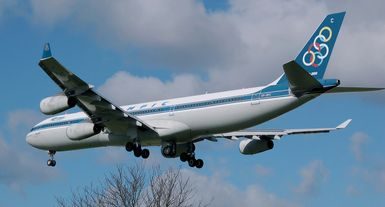
Aristotle Onassis didn’t just buy an airline. He bought a mess and turned it into a machine. That machine became Olympic Airlines.
The story starts long before the name change. It begins with a Greek shipowner who saw an opportunity in the sky. The airline was founded on April 6, 1957. Before that date, it was Olympic Airways. Before that? It was a graveyard of failed aviation attempts.
Three Failures Before One Success
Olympic Airlines didn’t emerge from thin air. It grew out of three previous companies that all failed. The Technical and Aeronautical Exploitations Company (TAE) formed in 1940. Hellenic Airlines followed in 1947. Then came Aeroporiki Metafori Elados (AME). None of them worked.
In 1951, the Greek government merged them under the TAE name. The state participated. But private owners still held the reins. It was still largely a private venture with government backing. And it still wasn’t profitable enough.
Then came the nationalization in 1955. The state took control. But only for a brief moment.
Onassis Buys the Dream
In 1957, Onassis purchased the company. He reorganized it. He renamed it. He made it efficient. He made it profitable.
This was the era when Greek aviation began to matter globally. Services from Greece into western Europe started in 1957. By 1980, the reach was massive. Athens became a hub. Flights went throughout Greece. They went internationally to major cities in Europe. They went to the Middle East. They crossed the Atlantic to North America. They reached Africa. Southeast Asia. Australia.
Onassis built this empire. He ran it until his death in 1975.
Government Takes the Wheel
On January 1, 1975, the Greek government stepped in. They purchased all shares and assets owned by Onassis and his associates. Olympic Airways was no longer private. It was wholly owned by the state.
The brand evolved slowly. In 2003, the name changed again. Olympic Airlines. The spelling shifted. The ownership remained public.
What happened to the carrier after that? The article stops there. The efficiency Onassis built eventually faced the realities of state ownership and global competition. But the foundation was laid by a shipowner who understood that timing matters more than tradition.
The airline survived decades of political shifts. It survived ownership changes. It survived name changes. It survived the collapse of its private founder.
Does a government-run airline ever really feel like an airline? Or just another state department with wings? The name changed in 2003. The fate changed long before that.