




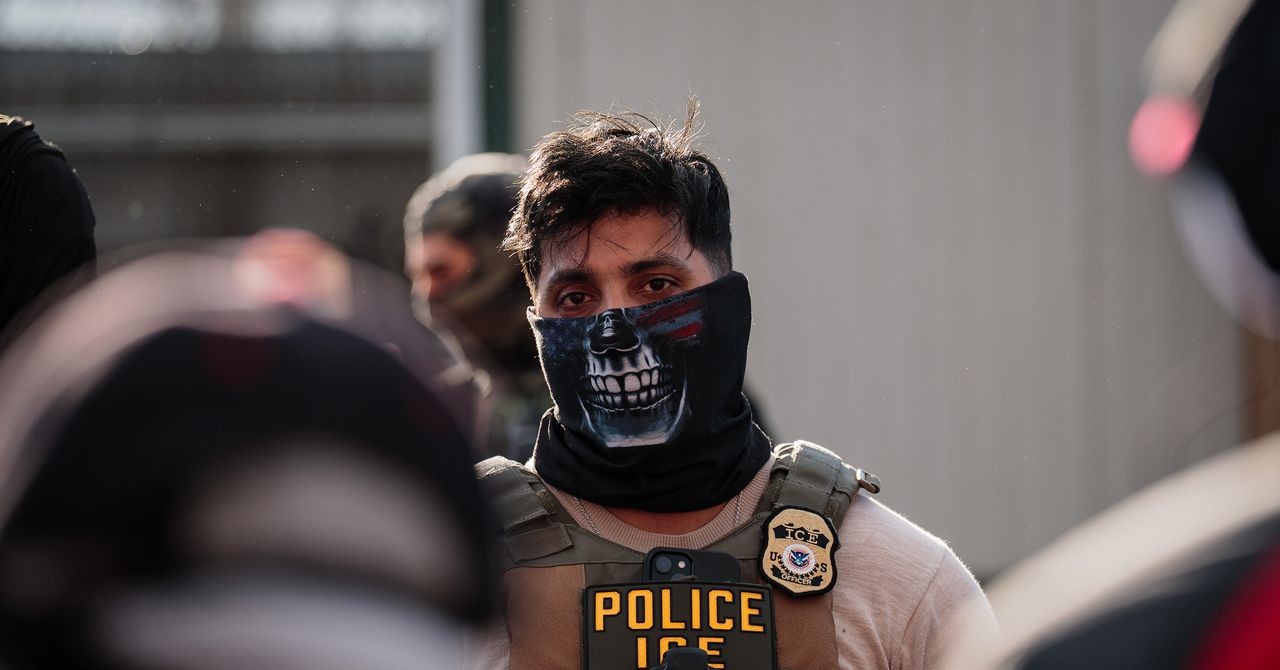
The federal government is suing five states and Philadelphia. Their argument is blunt: local laws forcing ICE agents to remove their masks during raids are dangerous. The Justice Department claims that if officers must show their faces, they risk being tracked down by activists. It is a safety issue. Or so the complaints say.
But the evidence supporting this fear doesn’t hold up. The technology cited by the government is flawed. The databases are outdated. The actual risk appears minimal.
The suit targets laws in New York, Virginia, Connecticut, New Jersey. Philadelphia is included too. These laws generally prohibit law enforcement, including federal Immigration and Customs Enforcement officers, from concealing their identity during immigration enforcement operations. Some require badges. Some ban masks entirely. The Trump administration argues this puts agents at risk of “doxing.” Specifically, they point to online tools that use facial recognition to link an agent’s face to their private social media or home address.
ICESpy is one such tool. It is also an art project. Its creator, Kyle McDonald, says the federal government’s panic is misplaced.
The Database Problem
The core of the DOJ’s argument rests on the idea that activists are actively hunting for specific ICE agents using these sites. That assumes the data matches the people doing the shooting. It doesn’t.
ICESpy pulls data from LinkedIn profiles. Not current ones. Old ones. The dataset was built from profiles of people who self-identified with ICE nearly a decade ago. WIRED reviewed a copy. It contained just over 700 names. Most held titles like “assistant chief counsel” or worked in administrative roles. Only 39 had “deportation officer” in their title. Twenty-seven others had related enforcement titles.
The roster is ancient.
ICE expanded rapidly in January. The agency doubled its workforce from 10,000 agents to 22,000 in a matter of months. Those 12,000 new officers aren’t in the ICESpy database. Unless they logged their jobs on LinkedIn in 2018, the system won’t recognize them. It won’t find them.
“They offer no evidence of this in the [federal] filing,” McDonald told WIRED. “The idea that someone could use a site… and find an active ICE deportation officer [now] is absurd.”
Low Traffic, Low Utility
Even if the data were accurate, nobody seems to be using the tool for harassment. Activity logs for ICESpy from late June show only 84 page views in a week. That’s low, even for a niche project. More importantly, only two attempts were made to match a face against the database.
McDonald says both results were garbage. No valid hits.
“I’m sure people were playing with it… But it is not an active threat,” he said.
The federal complaint also points to another site: ICE List. Maintainers describe it as an accountability initiative, not a doxing ring. It tracks names, field offices, and public incidents. It relies on manual research, not automated facial recognition sweeps.
Dominick Skinner, the site’s maintainer, admitted there’s a small group trying to use face-recognition tech on the data. But the results? “Overblown,” he said. The site lacks a public tool for computational photo analysis. Most pages just include headshots for identification by humans.
Real Consequences, Real Gaps
The data may be old. But the lack of transparency is real.
Recently, ICE List users helped identify David Brouillette. Brouillette is an ICE agent and former soldier. He allegedly shot and killed Johan Sebastián Durán Guerrera, a 25-year-old man in Maine. The site asked for local tips. Two people came forward. Brouillette’s former wife later noted she had reported mental health concerns to military superiors years prior.
This isn’t doxing in the traditional sense. Skinner doesn’t publish home addresses. He publishes public records. Other data broker sites sell intimate personal information about government employees. Those sites don’t face lawsuits. ICE List does.
The Department of Justice won’t say how many agents have actually been harmed by these sites. Spokesperson Kiersten Pels claims agents are being harassed. She refused to provide a concrete example of ICESpy being used to identify an agent in a specific threat case.
The Real Issue
While the federal government argues about hypothetical tech threats, state lawmakers argue about accountability.
In Maine and Texas this month, ICE agents fatally shot two people. Body cameras—mandated by Congress—were turned off. Federal officials stonewalled Minnesota investigators for six months regarding the deaths of Renee Good and Alex Pretti. It took court orders to get the evidence.
Meanwhile, ICE’s internal watchdog is reportedly investigating civilians who criticize immigration policies online.
Bob Duff, a Connecticut senator behind one of the challenged laws, says the feds have their priorities wrong.
“States have a right… to react and respond to what we seeas unconstitutional behavior,” Duff said.
Virginia Senator Saddam Salim went further. He told the administration to stop suing over mask bans. Instead, he said they should investigate corruption in the Trump organization. Release the Epstein files. Focus on the poor training of agents.
The mask laws are about democracy. About who can look at you when they detain you. The feds see it as a target on their back.
Maybe they’re afraid of what people might find if they actually look.